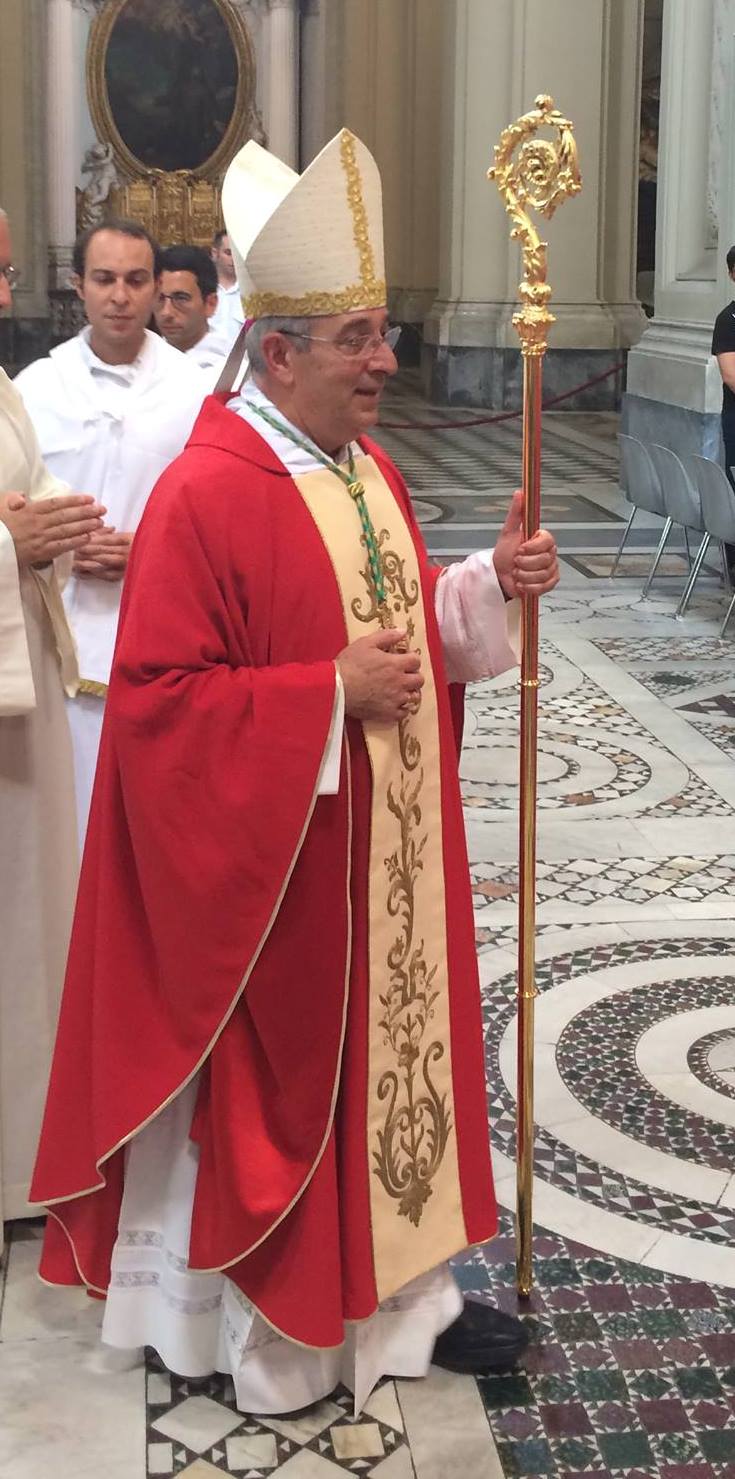
Angelo De Donatis was born on 4 January 1954 in Casarano, in the province of Lecce and the diocese of Nardò-Gallipoli. He trained at the seminary of Taranto and the Pontifical Roman Major Seminary, studied philosophy at the Pontifical Lateran University and theology at the Pontifical Gregorian University, where he took a licentiate in moral theology. Ordained a priest on 12 April 1980 for Nardò-Gallipoli, he was incardinated into the Diocese of Rome on 28 November 1983, and spent the next three decades in Roman pastoral work: parish ministry at San Saturnino, director of the Vicariate's Clergy Office (1990–1996), spiritual director at the Pontifical Roman Major Seminary (1990–2003), and from 2003 parish priest of San Marco Evangelista al Campidoglio.
In Lent 2014 Pope Francis chose him — still a parish priest — to preach the Spiritual Exercises of the Roman Curia. He was appointed auxiliary bishop of Rome, with the titular see of Mottola, on 14 September 2015 and consecrated by Pope Francis on 9 November 2015. On 26 May 2017 Francis named him Vicar General of Rome and Archpriest of the Archbasilica of Saint John Lateran, the first man made vicar general while not yet a cardinal since the sixteenth century. He was created a cardinal in the consistory of 28 June 2018 and assigned San Marco, the church where he had been parish priest, and he served as apostolic administrator of the Ukrainian Catholic exarchate in Italy from 11 July 2019 to 24 October 2020.
As vicar he steered the diocese through the COVID-19 pandemic — including a brief order closing Rome's churches in March 2020, modified the next day — and was himself hospitalised with the virus that month. On 6 April 2024 Pope Francis appointed him Major Penitentiary. He is a member of the Dicastery for the Clergy and of the Dicastery for Institutes of Consecrated Life and Societies of Apostolic Life. He participated as a cardinal elector in the 2025 conclave that elected Pope Leo XIV.
Consequential Quotes
In the world and in the church, there are changes underway that strongly shake established certainties, producing deep unease and causing fears that condition the reflection and decisions of individuals and entire communities.
Within the church, it increases the temptation to look at the present with pessimism and to look at the past as the golden age to return to.
I have had the opportunity to contemplate great miracles of grace. The Lord is faithful and at work.
We do not need competent and qualified professionals as much as Christians who apparently are like everyone else but, in reality, are able to dream, to infect others with their dreams and want to experience something new.
Major Works & Initiatives
Spiritual Exercises for the Roman Curia
Chosen by Pope Francis to preach the Lenten retreat meditations to the Pope and the Roman Curia — an assignment long reserved to cardinals and well-known theologians — while still a Rome parish priest.
Nulla è più dolce dell'amore
Book of twenty reflections on the forms of mercy read through the Bible, first published in RomaSette, the diocesan supplement of Avvenire (Paoline Editoriale Libri, 2016). Its title echoes his episcopal motto, Nihil caritate dulcius — 'nothing is sweeter than love'.
Vicar General of Rome
Served from 26 May 2017 to 6 April 2024 as the Pope's Vicar General for the Diocese of Rome and Archpriest of the Archbasilica of Saint John Lateran — the first man named to the vicariate while not a cardinal since the sixteenth century.
Major Penitentiary
Appointed on 6 April 2024 to head the Apostolic Penitentiary, the Vatican tribunal for the internal forum, including indulgences and cases reserved to the Holy See; he is also a member of the Dicastery for the Clergy and of the Dicastery for Institutes of Consecrated Life and Societies of Apostolic Life.
Controversies
The Rupnik case and the Centro Aletti statement
As Cardinal Vicar, De Donatis's diocese issued a September 2023 statement praising the Centro Aletti, the art and theology centre founded by Father Marko Rupnik, following a diocesan visitation; the note said the Church in Rome held it primary and fundamental to welcome with profound respect the pain and suffering of all the people involved. Women who had accused Rupnik of spiritual and sexual abuse criticised the statement, expressing 'bewilderment' at its praise of the centre, and saying it ridiculed their pain (Catholic News Agency). How the diocese handled the centre remains contested between the vicariate and Rupnik's accusers.
Implementing Traditionis custodes in Rome
In 2021 De Donatis issued norms for the Diocese of Rome permitting celebration of the Mass in the extraordinary form except during the Easter Triduum, while banning celebration of the other sacraments in the extraordinary form outright. Traditionalist Catholics criticised the sacramental ban as going beyond what Pope Francis's motu proprio required; the vicariate presented the rules as its implementation of the motu proprio for the diocese (Catholic News Agency).
Closing Rome's churches, March 2020
On 12 March 2020, with public Masses already suspended across Italy, De Donatis decreed Rome's churches closed to the public. The next morning Pope Francis prayed for pastors who 'must accompany the people of God in this crisis' and warned that drastic measures are not always good; De Donatis modified the decree the same day to let parish churches open with precautions, saying he had spoken with the Pope before issuing each of the orders. Supporters saw prudent compliance with public-health measures; critics saw a decree reversed under pressure (Catholic News Agency; National Catholic Reporter).