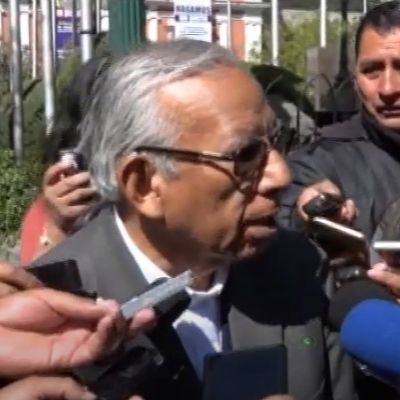
Toribio Ticona Porco was born in Atocha, in Bolivia's Potosí department, on 25 April 1937, of Quechua origin. Before seminary he worked as a shoeshiner, newspaper vendor, bricklayer's assistant, mechanic, and brewery worker. Ordained a priest for Potosí on 29 January 1967, he served the mining town of Chacarilla — where for fourteen years he was the town's mayor as well as its priest — and was imprisoned at one point for “defending the cause of the poor.” Appointed auxiliary bishop of Potosí in April 1986 (consecrated 31 May by the nuncio, Santos Abril y Castelló), he became Prelate of Corocoro on 4 June 1992, serving twenty years until July 2012, when his resignation was accepted (29 July, per the Holy See biography; Wikipedia gives 29 June).
In 2018 Francis named him a cardinal — at 81, among the honourary creations — with the title of Santi Gioacchino ed Anna al Tuscolano, making him the first Latin American cardinal from one of the continent's indigenous peoples. President Evo Morales attended the consistory and called him “our first indigenous cardinal and worker.”
Consequential Quotes
As a result of the false accusation which is being spread in the media regarding my private life, it is my duty to declare and emphatically make clear that its content does not correspond to the truth.
Major Works & Initiatives
Prelate of Corocoro
Twenty years in the Bolivian highlands.
The priest-mayor
Fourteen years as mayor of Chacarilla alongside his ministry.
A historic first
The first indigenous Latin American cardinal.
Controversies
The 2018 allegation and the Vatican's investigation
In May 2018 a blog alleged Ticona Porco was living “as husband and wife” with a woman and had two children. He emphatically denied the claim, calling it calumny and threatening a libel suit. Il Messaggero reported the Vatican had carried out “deep investigations” which found “nothing is true” about the claims.