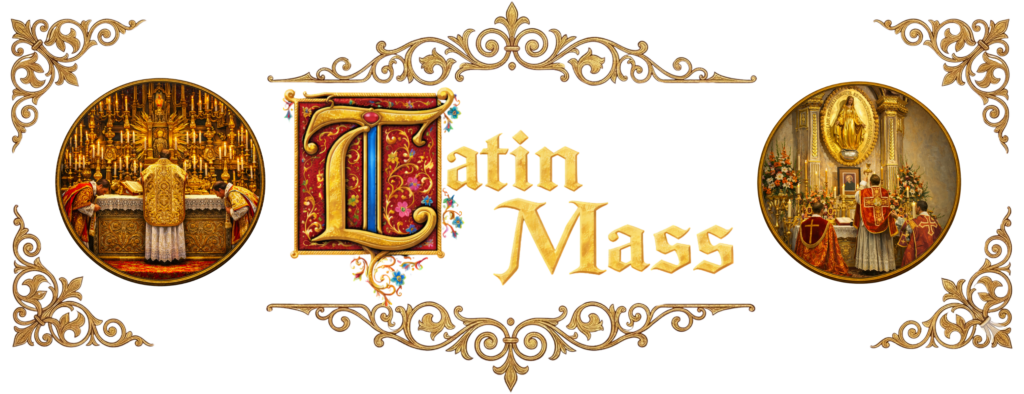
When the liturgy emerged from the Upper Room—borne forth by the Apostles who were charged by the Lord to perpetuate the sacrifice of the New Covenant—the Church obeyed His command: “Do this in memory of Me.” Endowed with the divine authority to confect the Eucharist, and guided unfailingly by the Holy Spirit, the Church did not invent worship anew in each age, but received, guarded, and lovingly unfolded it. Around that sacred and unchanging nucleus—the offering of Christ Himself—the Church wove, with prayerful care and theological precision, a living crown of ritual, language, and gesture, meant to edify the faithful, nourish souls, and preserve the integrity of the Faith across centuries and continents.
Though often labeled “Tridentine,” the Roman Mass is no product of a single council or moment in history. Its essential structure is already identifiable by the fourth century¹, long before it was formally codified for the Latin Church. The Council of Trent did not fabricate this liturgy; it safeguarded it. Like her venerable Eastern sister rites, the Roman Mass is the result of organic development, not innovation—growth faithful to its origin in the Upper Room. This is no point-in-time creation, but a living continuity: the same sacrifice, the same priesthood, the same act of worship handed down from the Apostles themselves. This is the Mass of the Ages. This is the Mass of the Apostles.
This is the Mass that strengthened the early martyrs as they sang the praises of Christ unto death.This is the Mass that sanctified the catacombs and echoed beneath the vaults of ancient Rome.
This is the Mass that gathered Europe beneath its mantle and formed a civilization around the altar.
This is the Mass that crossed the oceans and consecrated the soil of the New World, celebrating the first true Thanksgiving.
This is the Mass that brought Mexico to the Faith under the tender call of Our Blessed Mother.
This is the Mass that arrived on the shores of the Philippines and nourished the souls of those islands.
This is the Mass that inspired the Angelic Doctor to give voice to heaven itself: Adoro Te Devote, Pange Lingua Gloriosi.
This is the Mass the Church formally codified—not to change it, but to defend it against error.
This is the Mass of the great missionaries and the Spanish friars.
This is the Mass that made Saint Francis of Assisi tremble, who said that the whole world should quake before the mystery placed upon the altar.
This is the Mass of the Ages.
This is the Mass of the Apostles.
This is the Mass that sustained the entire Western Church—her saints, her scholars, her martyrs—from time immemorial until our own day.
And this is the Mass that will sustain her still, carrying her through every crisis, until the end of time.
Featured Articles
Liturgal Topics
FAQ
-
Defending the Traditional Latin Mass: A Rebuttal to Recent Criticisms
ByadminIntroduction A recent commentary claimed that supporters of the Traditional Latin Mass (TLM) are clinging to a “harmful, discarnate ideology”…
-
Defending the Faith Series: The 3 Worst Arguments Protestants Make Against Catholics
ByadminIf you’ve ever spoken with anti-Catholic Protestants, you’ve likely heard their favorite talking points: “You worship Mary,” “Catholics aren’t even…
-
Why Does the Church Attack Its Own Tradition? A Simple Explanation for a Complex Crisis
ByadminTo the average Catholic in the pew—especially those discovering the beauty of traditional liturgy, reverent worship, and the richness of…
-
Rediscovering Apostolic Faith: The Explosive Growth of the Mass of St. Gregory the Great
ByadminApostolic Roots The Vetus Ordo, the Latin Mass, the Mass of St. Gregory the Great, the TLM — this Mass, codified…
-
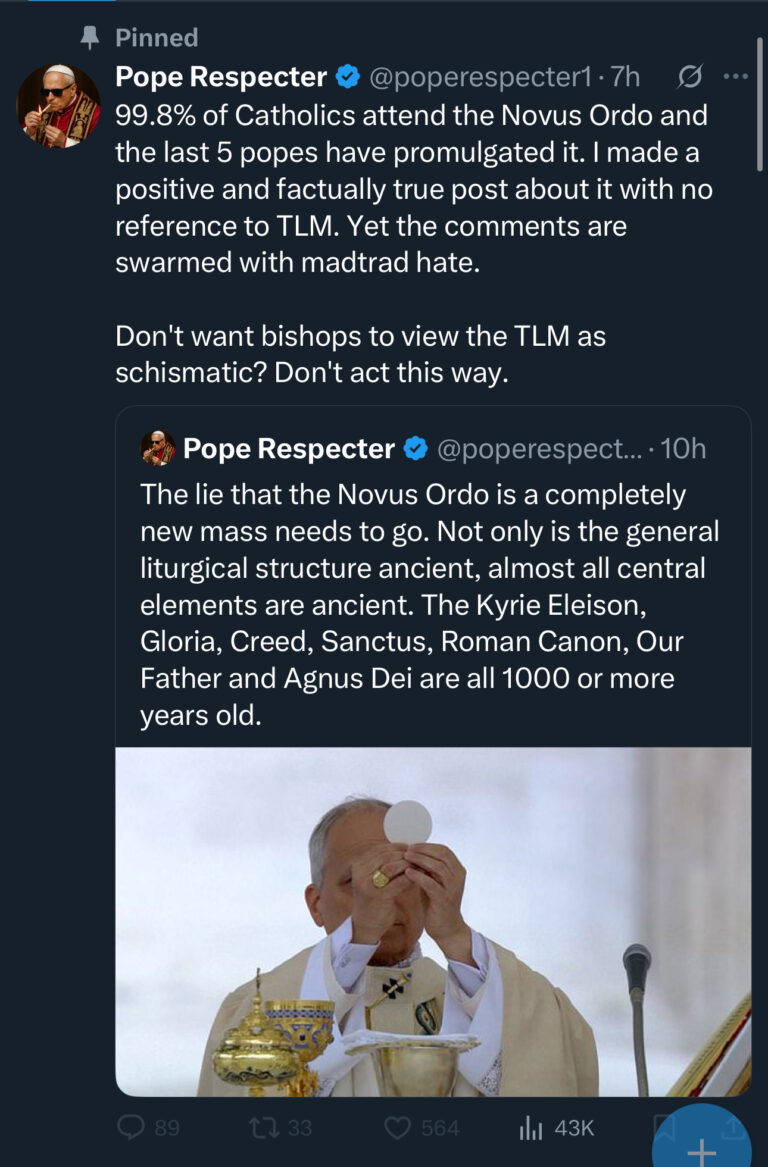
𝐍𝐨, 𝐭𝐡𝐞 𝐍𝐨𝐯𝐮𝐬 𝐎𝐫𝐝𝐨 𝐈𝐬𝐧’𝐭 𝐀𝐧𝐜𝐢𝐞𝐧𝐭 𝐉𝐮𝐬𝐭 𝐁𝐞𝐜𝐚𝐮𝐬𝐞 𝐈𝐭 𝐁𝐨𝐫𝐫𝐨𝐰𝐬 𝐀𝐧𝐜𝐢𝐞𝐧𝐭 𝐏𝐚𝐫𝐭𝐬
ByadminLet’s get one thing straight: just because the Novus Ordo includes prayers and elements that are ancient (like the Kyrie,…
-
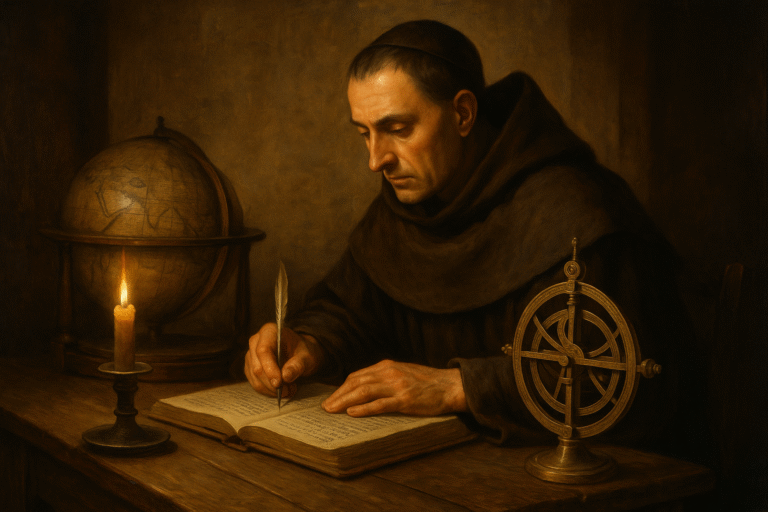
The Catholic Birth of Modern Science
ByadminModern narratives often cast science and religion as opposing forces, locked in an eternal struggle. The Church, we are told,…
What the Latin Mass is (and isn’t)
Why Christ established a visible Church with teaching authority and historical continuity.
The Liturgical Movement
Why Christ established a visible Church with teaching authority and historical continuity.
Vatican 2, The Liturgy & The aftermath
Why Christ established a visible Church with teaching authority and historical continuity.
Our Latin Mass Missal Online
Why Christ established a visible Church with teaching authority and historical continuity.
Latin Mass Societies & Fraternities
Why Christ established a visible Church with teaching authority and historical continuity.
For many Catholics, their journey to the Traditional Latin Mass begins with a profound and unexpected discovery: the Mass they attended their entire lives is not ancient at all—in fact, it’s likely younger than their parents. The liturgy promulgated by Pope Paul VI in 1969, commonly known as the Novus Ordo or “New Mass,” replaced a form of worship that had organically developed over nearly two millennia. This was the first time in Church history that an entirely new Mass was created through committee design.
Read more
This is perhaps the most common misunderstanding about the Traditional Latin Mass—and the evidence overwhelmingly refutes it. Many devotees are too young to remember it at all.The attachment to the Traditional Latin Mass is rooted not in sentimentality for the past, but in substantive theological, liturgical, and spiritual differences that distinguish it from the post-1969 liturgical reform.
Read More
This is perhaps one of the most important questions to answer clearly, because it cuts to the heart of a common misunderstanding. Many well-meaning Catholics assume that if the Novus Ordo were celebrated with all the traditional externals—Latin language, ad orientem posture, Gregorian chant, incense, beautiful vestments, careful gestures—then it would be essentially the same as the Traditional Latin Mass. This assumption, while understandable, misses the fundamental point entirely.
A reverent Novus Ordo celebrated with Latin, ad orientem, and all the beauty of traditional Catholic worship is indeed commendable. It represents a significant step in the right direction and should be encouraged. But the contention that many have with the Novus Ordo is not simply about externals. It has to do with its very core—with what the progressive reformers gutted and removed from the heart of the Mass itself.
Read More
This is, to be perfectly frank, one of the most frustrating misconceptions about Traditional Catholics and their attachment to the Latin Mass. It’s an assumption that entirely misses the point—and it’s a misconception that needs to be corrected decisively.
The assumption goes something like this: “Traditionalists are just nostalgic for Latin. They think God prefers one language over another. They’re attached to externals and missing what really matters.”
Nothing could be further from the truth.
What Traditional Catholics Actually Care About
While there is indeed a deep love for the Latin language—born of its nearly two-millennia history in the Church, its precision, its universality, and the rich culture that developed around it—a Traditional Catholic’s primary concern is not the language itself. What matters most is the liturgical substance, the content of the prayers, the reverence with which Mass is celebrated, and the theological richness embedded in the rite.
In short: Traditional Catholics care about correct and traditional liturgy.
The Latin language is valued, yes—but it is valued largely because it has faithfully preserved and transmitted the prayers and theology we hold dear. Latin is the vehicle, not the destination.
What the Council Fathers Actually Wanted
This becomes strikingly clear when we look at what actually happened during and after Vatican II. The tragedy is not that the Mass was put into the vernacular—it’s that when the vernacular was introduced, the reformers didn’t simply translate the traditional prayers. Instead, they replaced them.
Cardinal Josef Frings, a distinguished medieval scholar and the archbishop of Cologne, said in 1969: “This is not what we council fathers decided; this is against the decisions of the council. I cannot understand how the Holy Father could give his consent to such a thing.” The Catholic Thing
In his view, “the council didn’t want many things, but then came the periti (experts), and they were mostly very progressive gentlemen, and they pushed everything in a different direction.” The Catholic Thing
Cardinal Frings’s peritus—his theological advisor during the Council—was none other than Joseph Ratzinger, the future Pope Benedict XVI. Ratzinger himself wrote to a colleague in 1976: “I can say with certainty from my knowledge of the council debate and from rereading the speeches of the council fathers delivered at that time that [the Novus Ordo] was not intended by them.” The Catholic Thing
Think about that. The very theologians who helped draft the documents of Vatican II are saying the Mass that resulted was not what the Council intended.
Read More
This question strikes at the heart of what we understand about worship itself. The answer requires us to think beyond mere validity to consider what we truly owe to God and how the liturgy shapes our souls.
Validity is a Floor, Not a Ceiling
Validity is the absolute minimum—the bare threshold that must be crossed for a sacrament to occur. It answers the question: “Did this happen?” But it tells us nothing about whether what happened was offered with the reverence, beauty, and theological richness that such a sacred action deserves.
As Pope John Paul II rightly said: “Like the woman who anointed Jesus in Bethany, the Church has feared no ‘extravagance,’ devoting the best of her resources to expressing her wonder and adoration before the unsurpassable gift of the Eucharist.” So while it may be true that the only things necessary for a valid Mass in the Roman Rite are unleavened bread made from wheat and wine made from grapes, a priest, and the words of consecration, to see this as sufficient for the offering of the Holy Sacrifice of the Mass would betray a reductive, minimalist, and parsimonious view of things.
To settle for mere validity is to embrace a poverty of spirit entirely foreign to the Catholic tradition. It is to ask: “What is the least I can offer God?” rather than “What is the most worthy offering I can bring to the King of Kings?”
The Church’s Historical Vigilance Over the Sacred Liturgy
The Church has never treated the liturgy with such casual indifference. For centuries—indeed, for nearly two millennia—the Church moved with extraordinary caution in liturgical matters, understanding that what was at stake was not mere ritual but the very formation of Catholic souls.
For over three thousand years, from the time of Moses to the present day, Sacred Liturgy has been at the very heart of the faith of God’s people. First in the revelation of God to Moses on Mt. Sinai concerning the tabernacle, the priesthood, and proper worship, and then fulfilled by Christ at the Last Supper, the liturgy is a participation in the life and worship of heaven.
For over three thousand years, from the time of Moses to the present day, Sacred Liturgy has been at the very heart of the faith of God’s people. First in the revelation of God to Moses on Mt. Sinai concerning the tabernacle, the priesthood, and proper worship, and then fulfilled by Christ at the Last Supper, the liturgy is a participation in the life and worship of heaven. Prime Matters
The Church jealously guarded the liturgy because she understood a profound truth: the liturgy is not ours to manipulate according to passing fashions or contemporary preferences. Just as we do not own or control God’s word but are possessed and transformed by it, so we do not own or control the liturgy but are molded and shaped by it according to heaven’s divine order. Prime Matters
This is not to claim there were never liturgical abuses or periods requiring reform. There certainly were. But the Church’s response was always careful restoration, not revolutionary replacement. She tended the liturgy as a gardener tends an ancient tree—with reverence, wisdom, and the patient knowledge that what has been cultivated over centuries should not be uprooted on a whim.
Lex Orandi, Lex Credendi: How We Pray Shapes What We Believe
At the foundation of the Church’s careful stewardship of the liturgy lies an ancient and profoundly important principle: lex orandi, lex credendi—the law of prayer is the law of belief.
The maxim was first coined by the 5th-century writer Prosper of Aquitaine. It refers to the relationship between worship and belief, that people’s prayers shape their faith. Wikipedia This axiom highlights the understanding that the Church’s teaching (lex credendi) is articulated and made manifest in the celebration of the liturgy and prayer (lex orandi). Prayer and worship is the first articulation of the faith. USCCB
This is not merely a pious platitude. It is a recognition of how human beings actually form their understanding of God and their faith. How we worship reflects what we believe and determines how we will live. Catholic Online The liturgy is not primarily a catechetical tool, nor is it a Bible study session—but it profoundly shapes our theology, our understanding of the faith, and our lived relationship with God.
When the Church prays prayers that have been prayed for centuries, prayers rich in theological content, prayers that explicitly teach Catholic doctrine through their very words and gestures, the faithful absorb this teaching at the deepest level. When those prayers are altered, diminished, or removed, something crucial is lost—not necessarily the validity of the sacrament, but the fullness of faith that the liturgy is meant to convey and cultivate.
If Validity Were All That Mattered, Liturgy Wouldn’t Matter At All
Consider the logical conclusion of treating validity as sufficient: if all that mattered were valid Holy Orders and the proper matter and form for the Eucharist, then we could celebrate Mass in any setting our hearts desired. A “rock concert Mass” with guitars and drums, smoke machines and spotlights. A “dinner party Mass” celebrated at a restaurant table among ordinary food and conversation. A “beach Mass” in swimsuits on the sand with seashells for sacred vessels.
All of these could theoretically be “valid”—but they would be a profound offense against the majesty of God and the sacred character of the Eucharistic sacrifice. They would fail to give God the worship He deserves. They would fail to express the transcendent reality of what is occurring. They would fail to form the faithful in a proper understanding of the sacred.
Read More
This is one of the most persistent and damaging misconceptions about the Traditional Latin Mass. The short answer is: No. Absolutely not.
The Council of Trent did not create the Traditional Latin Mass. What Trent did was codify it—that is, standardize and protect what had already existed organically for well over a thousand years. To say Trent “created” the Traditional Mass is like saying the Council of Nicaea “created” the doctrine of the Trinity. Both councils defended, defined, and protected what the Church had always believed and practiced.
The Roman Rite: An Apostolic Liturgy
The Roman Rite is, in its essence, an Apostolic rite—meaning its origins trace directly back to the Apostles themselves and the earliest Christian communities in Rome.
In fact, of all liturgical prayers in the Christian world, east and west, there is none more ancient or venerable than the Roman Canon. This canon has been retained virtually unaltered since the time of Pope St Gregory the Great (590-604+), the collector and organizer of this liturgy, and in its essentials, can be said to date back to the Apostolic era and even to Saint Peter himself.
Read more
What’s really at stake: When progressives attack the TLM, they’re trying to eliminate the living embodiment of a Catholicism they wish to transform. The TLM represents:holicism they wish to transform. The TLM represents:
- Organic development vs. committee creation
- Doctrinally explicit prayers vs. deliberately softened ones
- The sacred vs. the familiarized
- Protection from theological error
This is a struggle between two irreconcilable visions of Catholicism: one rooted in immutable Tradition, the other embracing constant adaptation. That’s why passions run so high and why this battle will define the Church for generations.The controversy isn’t about Latin or aesthetics—it’s a century-old battle for the soul of the Catholic Church between those defending unchanging Tradition and those pushing progressive “adaptation” to modernity.
The Deep Roots: The conflict began long before Vatican II, with the early 20th-century Liturgical Movement harboring radical elements that Pius XII condemned in 1947. Yet the revolutionaries persisted, and by the 1950s were already implementing experimental changes.
The Consilium’s Revolution: Archbishop Annibale Bugnini, the architect of the new Mass, was removed from his teaching position for being “too progressive,” yet was entrusted with rewriting the entire Catholic liturgy. Even his collaborator Louis Bouyer called him “a man as bereft of culture as he was of basic honesty.” Bugnini openly admitted the reforms aimed to remove language that might cause “spiritual discomfort”—changing prayers about “heretics” to “all brothers who believe in Christ” to accommodate ecumenical sensibilities.
Theological Progressivism: The same theologians pushing liturgical revolution (Karl Rahner, Hans Küng, Edward Schillebeeckx) were also promoting theological novelties previously condemned. Rahner’s “anonymous Christianity” and other ideas represent fundamental departures from traditional Catholic teaching. These progressives didn’t just want a new Mass—they wanted a new Church.
The Novus Ordo isn’t monolithic: Many Catholics attending the New Mass are simply unaware of these battles and attend in good faith. Additionally, the “Reform of the Reform” movement recognizes the problems and seeks reverent celebration with traditional elements. Traditionalists view them as allies but believe they’re trying to fix something fundamentally broken.
Yes—but this needs to be properly understood and qualified.
This is a difficult truth to articulate charitably, but intellectual honesty requires us to acknowledge it: the Traditional Latin Mass is objectively superior to the Novus Ordo in theological richness, liturgical integrity, spiritual fruitfulness, and continuity with Tradition. However, this statement must be accompanied by several important clarifications.
First: What We’re NOT Saying
We are not saying that:
+ You cannot be saved by attending the Novus Ordo (you absolutely can)
+ The Novus Ordo is invalid (it’s not—when properly celebrated, it confects the Eucharist)
+ Catholics who attend the Novus Ordo are bad Catholics (many are far holier than we are)
+ Priests who celebrate the Novus Ordo are unfaithful (most are doing their best with what they’ve been given)
+ God cannot work through the Novus Ordo (He can and does)
Read More
Yes. And this is not a matter of opinion or preference—it’s demonstrable through direct comparison of the prayers themselves.
This is an uncomfortable truth, but intellectual honesty demands we acknowledge it: the two rites teach different things about what the Mass is, what it accomplishes, and what role the priest and faithful play in it. These aren’t minor variations in expression—they’re substantive theological differences that have profound implications for Catholic faith and practice.
Let me be clear from the outset: we’re not questioning the validity of the Novus Ordo or the good faith of those who attend it. The Novus Ordo, when properly celebrated, confects the Eucharist. Catholics who attend it are doing nothing wrong. But to say the two rites are theologically equivalent would require us to ignore what the prayers actually say—and what they don’t say.
Read More
The Eucharist
The Catholic belief in the Real Presence and the biblical and historical foundations of the Mass.
Learning The LaTIn Mass
Learn the Foundations
Begin with Scripture, Tradition, and the core teachings of the Church. A strong foundation prevents confusion later.
Begin with Scripture & Tradition →
Study Common Objections
Familiarize yourself with the questions Catholics are most often asked — and the Church’s thoughtful responses.
Practice with Charity
Apologetics is not about winning arguments. It is about witnessing to the truth with humility, patience, and love.