Romano Guardini and Vom Geist der Liturgie
The book that launched the German liturgical movement — and the paradox at the heart of its author’s legacy
Theological Influence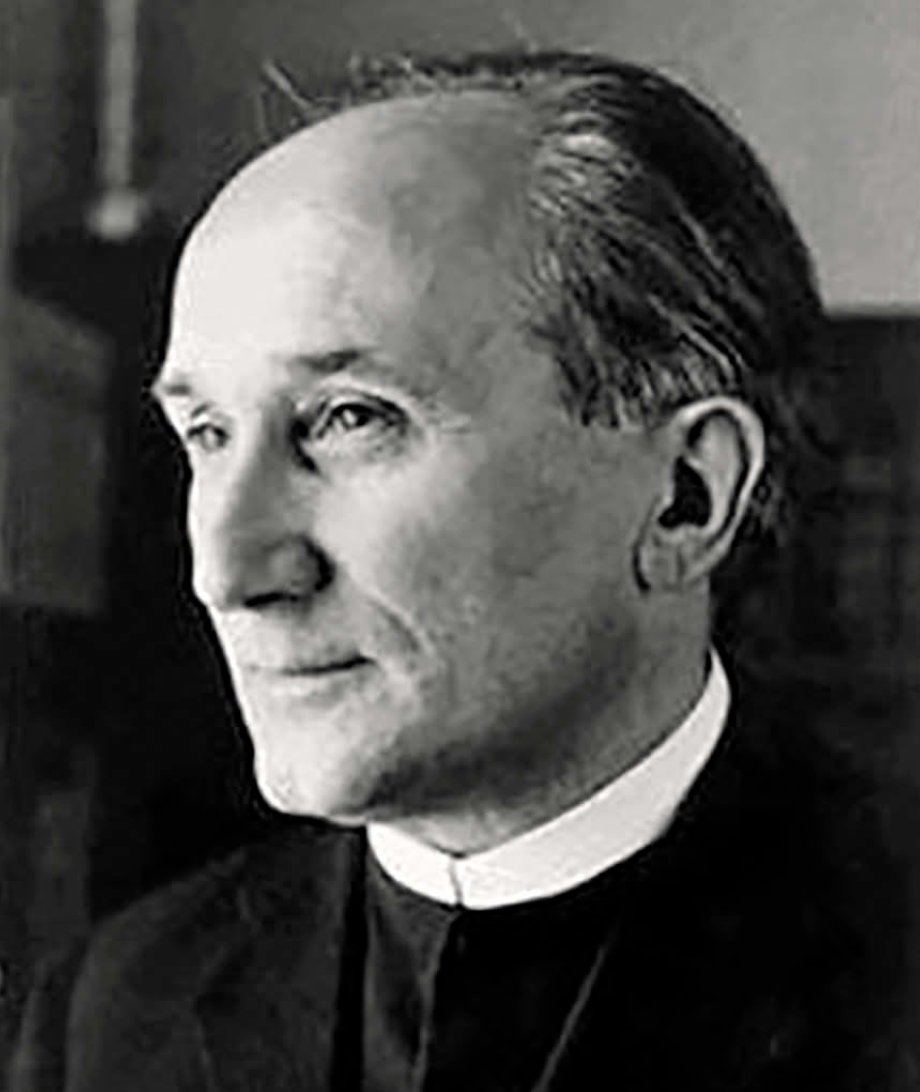
Guardini’s Vom Geist der Liturgie is often treated like a manifesto for liturgical change. It is not. It is better read as a program of liturgical conversion: a call for modern Catholics to be formed by the Church’s worship — so that the liturgy becomes again the primary school of faith, the anchor of prayer, and the antidote to religious individualism. He begins from a premise that feels almost jarring to modern ears: the liturgy is not principally about “my religious expression,” but about the Church’s worship of God — an objective act into which the individual is taken up. In the opening chapter, he insists that the liturgy is the Church’s public and lawful act of worship and that its subject is the united body of the faithful — the Church — rather than isolated individuals.
That framing matters for the trajectory of this entire timeline: Guardini is not trying to invent a new rite. He is trying to re-center the Christian inside an inherited act that is bigger than him.
“Active Participation” in Guardini: Interior, Intellectual, Ecclesial
Guardini’s “participation” is not an activism project. It is not a mandate for constant external busyness, improvisation, or “making it relevant.” His emphasis is on interior participation through truth. A central claim of the first chapter is that common prayer — precisely because it is common — must be shaped by logos (truthful thought) rather than by fluctuating emotion. He argues that the liturgy teaches that corporate prayer needs stability: that if prayer in common is to prove beneficial to all who take part in it, it must be primarily directed by thought, and not by feeling.
“If prayer in common is to prove beneficial to all who take part in it, it must be primarily directed by thought, and not by feeling.”
That line alone slices against a great deal of later rhetoric. Guardini’s vision is not “make worship more emotionally immediate.” It is: let the Church’s objective prayer discipline, purify, and form the inner man.
This is precisely where the later misappropriation of participatio actuosa — the phrase coined by Pius X in 1903 and enshrined in Sacrosanctum Concilium in 1963 — departs from Guardini’s framework. Pius X meant liturgical awareness and prayerful engagement with the sacred rites; Guardini elaborated this into a theology of formation by inherited worship. What the post-conciliar implementation frequently delivered was something else entirely: external activity — responses, gestures, processions, song leaders — measured by observable behavior rather than interior transformation.
Liturgy and Popular Devotions: Guardini Is Not an Iconoclast
One of the most important “misread” sections for understanding Guardini is where he refuses to set the liturgy in hostile opposition to popular devotion. He says bluntly that non-liturgical prayer cannot simply be forced into liturgical forms, and that it would be a greater mistake to discard valuable popular devotions for the sake of the liturgy.
The Guardini of Vom Geist der Liturgie is not a liturgical bulldozer. He is a realist: the liturgy has primacy (lex orandi), but devotion has its legitimate forms. This is a very different spirit from the later “purge everything that doesn’t look patristic” posture that characterized much of the 1950s and 1960s reform agenda.
When, in the years after Vatican II, parish churches stripped their altars of statues, removed votive candle stands, eliminated novenas and First Friday devotions, and generally treated popular piety as an embarrassment to be overcome — they were acting against Guardini, not in his name.
The “Fellowship” Theme: What He Meant — and What It Does Not Mean
Guardini’s communal emphasis is real, and it is part of why later reformers could quote him. But his “community” is not the self-celebrating circle; it is the Church as a real, ordered, trans-personal body praying a received act. He distinguishes the liturgy from a mere congregation: the liturgy belongs to the Church, conducted by the Church’s designated ministers, so that God is honored and the faithful sanctified.
That is not “democratize the rite.” That is ecclesiology: worship is ecclesial before it is personal. The presider acts in persona Christi, not as the community’s delegate. The congregation is taken up into an act larger than itself, not invited to redesign that act according to its preferences.
Style, Symbolism, Play, Seriousness: Guardini’s Conservative Aesthetics
Even before the reader reaches the famous later themes — symbol, style, “play” — the structure of the book signals Guardini’s aim: recover the grammar of sacred action. He is training the reader to see that liturgy is not functionalist (done only to produce a feeling or achieve a didactic outcome); not private (a personal devotion with a thin communal wrapper); and not infinitely malleable (because it is a long-formed, objective rule of worship).
This is why the book has been called “programmatic” for liturgical theology as a discipline. And this is why Guardini fits — in intention — much closer to the restorationist instinct of Prosper Guéranger than to any blueprint for liturgical fabrication: he wants reception and formation, not reconstruction.
The Guardini Paradox: Burg Rothenfels and the Quickborn Youth Movement
Here is where intellectual honesty demands a harder conversation.
Guardini was not merely a theorist writing from an armchair. Beginning in the early 1920s, he served as chaplain and intellectual leader of the Quickborn Catholic youth movement, based at Burg Rothenfels castle on the Main River in Bavaria. And at Rothenfels, he ran one of the most consequential liturgical laboratories in twentieth-century Catholicism.
The practical reforms implemented at Rothenfels included: celebration of Mass facing the people (versus populum); congregational responses in dialogue form; German hymns sung alongside the Latin texts; and a stripped-down, austere aesthetic in the castle chapel — designed by the architect Rudolf Schwarz — that deliberately departed from the ornate Baroque tradition and prefigured mid-century modernist church architecture.
The man whose theological framework insisted on receiving the liturgy as objective, ecclesial, inherited action was simultaneously pioneering practical changes that would later be universally mandated in the post-conciliar reform. He celebrated versus populum decades before it became the effective norm. He encouraged vernacular elements decades before Sacrosanctum Concilium opened the door.
This paradox must be addressed honestly, because if it is not, a knowledgeable critic will rightly object that the conservative Guardini has been cherry-picked while the reforming Guardini was hidden. The stronger historical claim — and the more accurate one — is this: the Rothenfels experiments happened within a framework of formation, theological seriousness, and deep reverence for the sacred. The later universal mandate happened within a framework of bureaucratic implementation, assumed relevance, and manufactured accessibility. The external forms overlapped. The controlling spirit did not.
Guardini’s versus populum at Rothenfels was an experiment within a community of intellectually serious young Catholics who had chosen intensive liturgical formation. Bugnini’s versus populum was imposed universally on every parish in the Latin Rite, with no formation, no theological preparation, and no organic development — exactly the kind of top-down fabrication Guardini’s own principles would have resisted.
The Nazi Suppression and the Interrupted Experiment
The Rothenfels experiment was cut short by external force. In 1939, the National Socialist regime confiscated Burg Rothenfels castle and dissolved the Quickborn movement. Guardini had already been stripped of his professorship at the University of Berlin in 1939 (he had held the chair in Catholic Weltanschauung since 1923). He was effectively silenced for six years, spending the war years in relative obscurity in Mooshausen, a small village in Swabia.
This biographical detail connects to the broader pattern visible across the entire timeline: the disruption of organic development by forces beyond the movement’s control. Just as the two World Wars interrupted the gradual absorption of liturgical scholarship into parish life — creating a pressure-cooker effect where decades of accumulated academic reform proposals were suddenly implemented all at once after 1965 — so the Nazi interruption cut short the Rothenfels experiment at the very moment when its long-term trajectory might have become clearer.
When Guardini returned to academic life after 1945 — first at Tübingen, then at Munich — the liturgical landscape had shifted dramatically. The movement was no longer a contemplative recovery of symbolic consciousness. It had become an institutional reform program with political momentum. Guardini spent the final two decades of his life increasingly concerned that the movement he had helped launch was moving in a direction he had not intended.
How the Misuse Works: A True Diagnosis Turned into a Warrant for Redesign
Guardini did make a haunting diagnosis — later paraphrased as “modern man may be incapable of the liturgical act.” That concern pervades the reception of his work and his later trajectory. Here is the pattern that runs across this entire timeline:
First, Guardini identifies a real problem: modern distraction, interior fragmentation, the loss of symbolic literacy, the inability to enter into corporate sacred action as anything more than passive spectators.
Second, Guardini proposes a remedy: formation by the inherited liturgy — through logos, symbol, discipline, ecclesial objectivity. The liturgy is the school; the modern man is the pupil. The solution is to bring man to the liturgy, not to bring the liturgy down to man.
Third, later reformers flip the remedy: if modern man cannot perform the liturgical act, then the liturgy must be remodeled until it elicits the “right” participation. The school is demolished and rebuilt to suit the student’s preferences.
That is a conceptual pivot from conversion to engineering.
The 1964 Letter to the Mainz Liturgical Congress
In April 1964, the Third German Liturgical Congress convened in Mainz. Sacrosanctum Concilium — Vatican II’s Constitution on the Sacred Liturgy — had been promulgated just four months earlier, in December 1963. Implementation was about to begin. The liturgical movement was on the verge of becoming liturgical law.
Guardini was elderly and too ill to attend. He sent a letter. In it, he recalled a conversation years earlier with Abbot Ildefons Herwegen of Maria Laach, in which he said that a sign the liturgical movement was truly “coming to life” would be a liturgical crisis — a moment when the Church would have to ask whether the liturgical act, in its full weight, was still within the capacity of modern man.
That line is often read triumphantly by proponents of radical reform: “See — Guardini predicted the need for change.” But the weight of the letter, and the best readings of it, suggest something far more sobering. Guardini was not asking a rhetorical question whose answer was “therefore, simplify everything.” He was posing the question that everyone was avoiding in their rush to implement: whether modern man, even with the help of the liturgical movement, could truly perform “the liturgical act” — and he meant the full weight of that phrase: symbolic consciousness, corporate prayer, submission to objective form, the capacity to stand before God in an act not of one’s own making.
He anticipated a crisis of reception and capacity, not a license for unlimited reconstruction. The tragedy is that the reformers read his question as an answer — and an answer that conveniently justified the program they were already implementing.
Guardini and Maria Laach: Two Currents in One Movement
The published Maria Laach article on this timeline documents the abbey’s role as the intellectual powerhouse of the German liturgical movement, and Guardini’s story is inseparable from that context. But the two intellectual currents emanating from Maria Laach — Guardini’s and Odo Casel’s — were notably distinct.
Casel’s approach was patristic and sacramental: his Mysterienlehre (Mystery Theology) argued that the Paschal Mystery becomes really present in the liturgical rite, drawing heavily on parallels with ancient mystery religions. Guardini’s approach was phenomenological and personalist: how does modern man, with his fractured consciousness and diminished symbolic literacy, encounter sacred form? Casel asked what the liturgy is; Guardini asked what the liturgy does to the person who enters it.
Both operated under Abbot Herwegen’s umbrella. Both were labeled “the liturgical movement.” But they represent distinct intellectual currents that would lead in different directions. Casel’s sacramental realism, with its emphasis on the Paschal Mystery as the controlling category of liturgical theology, fed directly into the post-conciliar shift away from Tridentine sacrificial language. Guardini’s personalism, with its emphasis on formation and receptivity, should have led to more careful, organic adaptation — but was instead co-opted to justify the rapid, top-down implementation Guardini’s own principles resisted.
Joseph Ratzinger and Guardini: The Through-Line to Benedict XVI
This is no small footnote. The relationship between Ratzinger and Guardini is one of the most consequential intellectual genealogies in modern Catholic liturgical history.
Ratzinger attended Guardini’s lectures at the University of Munich in the late 1940s, during the formative years of his theological education. The encounter left a permanent mark. When Ratzinger published his own The Spirit of the Liturgy in 2000, he deliberately chose the same title as Guardini’s 1918 work — not as coincidence, but as conscious homage. In the foreword, Ratzinger credits Guardini’s book with helping to rediscover the liturgy in its beauty, its hidden wealth, and its time-transcending grandeur. He describes it as the work that revealed the liturgy as the animating center of the Church and of Christian life.
Most significantly for this timeline, Ratzinger explicitly frames Guardini’s Vom Geist der Liturgie as having helped launch the liturgical movement in Germany — identifying this specific text, not Casel’s Mystery Theology, not Herwegen’s institutional program, as the founding moment.
The implications run deep. Ratzinger’s entire pontificate as Benedict XVI — the “reform of the reform,” the liberation of the traditional Mass through Summorum Pontificum (2007), the insistence on the “hermeneutic of continuity” — can be read as an attempt to recover what Guardini actually proposed against what the post-conciliar implementation actually delivered. Guardini wanted formation by the inherited liturgy. The post-conciliar reform delivered fabrication of a new liturgy. Ratzinger spent his career trying to reverse the pivot.
When Benedict wrote that the crisis of the Church is above all a crisis of the liturgy, he was speaking as a man whose liturgical imagination had been formed by Guardini — and who saw the post-conciliar reform as a betrayal of everything Guardini’s program actually entailed. The “Spirit of the Liturgy” that Ratzinger recovered from Guardini was not a mandate for change; it was a call to rediscover what was already there.
Where Guardini Belongs in This Trajectory
Guardini is best understood as a faithful son of the Church who tried to heal modern fragmentation by re-introducing Catholics to the liturgy’s objective, ecclesial, symbol-rich action. The Rothenfels experiments show he was willing to explore practical adaptations within that framework — and intellectual honesty requires acknowledging the tension between his principles and his practice.
But the tragedy for this narrative is not that Guardini aimed at fabrication. It is that later actors could quote the symptoms he identified while rejecting — or ignoring — the remedy he proposed: formation, discipline, and reverent submission to the liturgy as received.
The conceptual pivot from conversion to engineering — from bringing man to the liturgy to bringing the liturgy down to man — is the hinge on which the entire story of the Liturgical Movement turns. Guardini diagnosed the problem. The post-conciliar reform answered it with the opposite of his solution.
Even when post-conciliar reformers did not cite Guardini as a technical architect of rubrical change, they frequently leaned on the vocabulary he helped shape — community, participation, accessibility, relevance — to provide moral and pastoral legitimacy for structural reforms. Annibale Bugnini, the chief architect of the Novus Ordo Missae, employed precisely this rhetorical strategy in his memoir The Reform of the Liturgy 1948–1975: appeals to “the needs of modern man” and “pastoral effectiveness” that echo Guardini’s diagnostic language while implementing solutions Guardini’s controlling principles would not have sanctioned.
Critics of the reform — including Alcuin Reid, László Dobszay, and Ratzinger himself — have argued that this vocabulary was systematically detached from Guardini’s insistence on the liturgy’s objectivity and used to justify redesign aimed at producing measurable external engagement.
The pattern is not unique to Guardini. Across this timeline, it repeats with Beauduin (whose “democratize the liturgy” was pastoral, not political), with Pius X (whose participatio actuosa meant prayerful awareness, not committee-driven activism), and with Sacrosanctum Concilium itself (whose careful provisions were almost immediately exceeded by the implementation that followed).
Guardini’s Life and the Liturgical Movement
- 1885 — Born Romano Michele Antonio Maria Guardini in Verona, Italy; family moves to Mainz, Germany the following year
- 1910 — Ordained a priest of the Diocese of Mainz
- 1918 — Publishes “Vom Geist der Liturgie” (The Spirit of the Liturgy) as the inaugural volume in the Ecclesia Orans series, edited by Abbot Ildefons Herwegen of Maria Laach
- Early 1920s — Becomes chaplain and intellectual leader of the Quickborn Catholic youth movement at Burg Rothenfels castle
- 1923 — Appointed to the newly created chair of Catholic Weltanschauung at the University of Berlin
- 1920s–1930s — Rothenfels experiments: versus populum celebration, congregational dialogue, vernacular hymns, Rudolf Schwarz’s austere chapel design
- 1939 — Stripped of professorship by Nazi regime; Burg Rothenfels confiscated; Quickborn dissolved
- 1939–1945 — Lives in relative obscurity in Mooshausen, Swabia
- 1945 — Returns to academic life: first at Tubingen, then Munich
- 1964 — Sends letter to the Third German Liturgical Congress at Mainz, posing his famous question about modern man’s capacity for “the liturgical act”
- 1968 — Dies in Munich, October 1. The Novus Ordo Missae would be promulgated the following year
Rothenfels vs. the Post-Conciliar Reform: Same Forms, Different Spirit
The Guardini Paradox is not actually a contradiction — it is a lesson in the difference between organic experiment and bureaucratic imposition. Consider the contrasts:
- Versus populum at Rothenfels: An experiment within a self-selected community of intellectually serious young Catholics committed to intensive liturgical formation
- Versus populum after 1969: Imposed universally on every parish in the Latin Rite, with no formation, no theological preparation, and no organic development
- Vernacular at Rothenfels: German hymns sung alongside Latin, enriching the liturgical experience without replacing the received texts
- Vernacular after 1969: Near-total abolition of Latin, including in parishes where congregations had sung Latin for centuries
- Aesthetic simplicity at Rothenfels: Rudolf Schwarz’s chapel stripped to essentials as an act of contemplative focus within a community that understood the theological reasons
- Aesthetic simplicity after 1969: Mass destruction of altars, communion rails, statuary, and sacred art in parishes whose congregations were given no explanation beyond “the Council said so”
The external forms overlapped. The controlling spirit did not. Guardini’s experiments were rooted in formation and receptivity; the post-conciliar implementation was rooted in efficiency and assumed relevance.
From Guardini to Benedict XVI: The Unbroken Thread
The intellectual genealogy runs in a straight line: Guardini forms the young Ratzinger’s liturgical imagination at Munich in the late 1940s. Ratzinger carries that formation through his career as theologian, Prefect of the CDF, and finally Pope. His pontificate’s entire liturgical program — from the “hermeneutic of continuity” to Summorum Pontificum to his personal restoration of traditional liturgical practices — is an attempt to recover what Guardini actually proposed.
The tragedy Ratzinger/Benedict identified is precisely the one Guardini feared: that the movement’s vocabulary (participation, community, accessibility) was co-opted by actors who rejected its controlling principle (the liturgy’s objectivity and givenness). The result was not the formation Guardini envisioned but the fabrication he would have resisted.
When Traditionis Custodes (2021) reversed Summorum Pontificum, it effectively repudiated not only Benedict’s pontificate but the entire Guardinian vision: the claim that modern Catholics can and should be formed by the inherited liturgy, rather than having the liturgy continually reshaped to match modern expectations.
- Primary Sources
- Romano Guardini, Vom Geist der Liturgie (Freiburg: Herder, 1918). English: The Spirit of the Liturgy, trans. Ada Lane (Sheed & Ward, 1935; repr. Crossroad, 1998)
- Romano Guardini, Letter to the Third German Liturgical Congress, Mainz (April 1964). Published in Herder-Korrespondenz 18 (1964)
- Joseph Ratzinger, The Spirit of the Liturgy, trans. John Saward (Ignatius Press, 2000)
- Pius X, Tra le Sollecitudini (1903)
- Pius XII, Mediator Dei (1947)
- Annibale Bugnini, The Reform of the Liturgy 1948–1975, trans. Matthew J. O’Connell (Liturgical Press, 1990)
- Secondary Sources
- Robert A. Krieg, Romano Guardini: A Precursor of Vatican II (University of Notre Dame Press, 1997)
- Alcuin Reid, The Organic Development of the Liturgy, 2nd ed. (Ignatius Press, 2005)
- Hans Urs von Balthasar, Romano Guardini: Reform from the Source (Ignatius Press, 2010)
- László Dobszay, The Restoration and Organic Development of the Roman Rite (T&T Clark, 2010)
- Keith F. Pecklers, The Unread Vision: The Liturgical Movement in the United States (Liturgical Press, 1998)
- On Burg Rothenfels
- Rudolf Schwarz, The Church Incarnate: The Sacred Function of Christian Architecture (Henry Regnery, 1958)
- Robert A. Krieg, “Romano Guardini’s Theology of the Human Person,” Theological Studies 59 (1998): 457–74