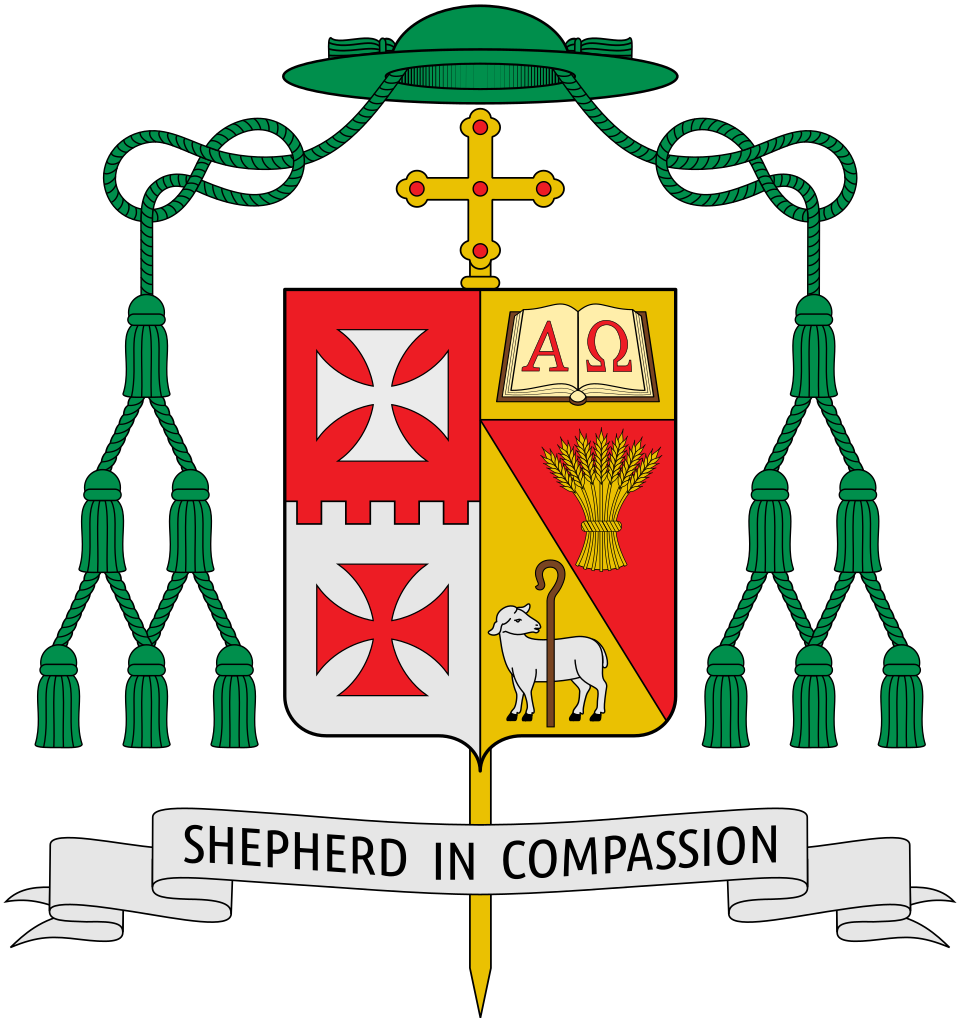
Steven Biegler
Steven Robert Biegler was born on March 22, 1959, in Mobridge, South Dakota, raised on his family's farm-ranch near Timber Lake, one of thirteen children of Alfred and Mary Biegler. After Timber Lake High School in 1977 and a year at the South Dakota School of Mines, he spent eight years working the family farm, where, as he later put it, he would turn the tractor radio off and meet God in nature's beauty and quiet. A spell with a construction crew filling old coal mines around Glenrock, Wyoming, followed before he entered seminary.
He studied philosophy at Immaculate Heart of Mary Seminary in Winona, Minnesota, then at the North American College in Rome, earning a sacred theology degree from the Gregorian University, and was ordained a priest of Rapid City on July 9, 1993, by Bishop Charles Chaput. His Rapid City years mixed far-flung parish and mission work with formation: North American College faculty from 2003 to 2006, a licentiate in biblical theology in 2007, diocesan administrator in 2010 and 2011, then vicar general and cathedral rector.
Pope Francis named him Bishop of Cheyenne on March 16, 2017, and he was ordained and installed as the diocese's ninth bishop on June 5, 2017, succeeding Paul Etienne. Cheyenne covers all of Wyoming, a vast, thinly peopled diocese, and Biegler has governed it as a rancher-priest turned Scripture scholar: plainspoken, hands-on, and willing to reopen a painful file rather than let it lie. Within a year of his installation he ordered a fresh investigation of the abuse allegations against his predecessor, Joseph Hart, a decision that would define his early episcopate.
- 2022-07-01Directives implementing Traditionis Custodes took effect in the Diocese of Cheyenne: temporary exceptions were made for Wyoming Catholic College and for the Monastery of the Monks of the Most Blessed Virgin Mary of Mount Carmel in Meeteetse, governed by other documents, and previous norms, instructions, permissions, and customs not conforming to Traditionis Custodes were abrogated. No public parish site was designated for the 1962 Missal, so no authorized public parish Traditional Latin Mass remained. The diocesan handbook lists a decree implementing Traditionis Custodes (item 102), but its linked PDF did not yield extractable text on fetch, so the operative wording rests on the tracker quotation plus the handbook listing; see the notes for the full debt. ↗
Biegler's Traditionis Custodes implementation, effective July 1, 2022, was the starkest in this batch. Previous norms, instructions, permissions, and customs that did not conform to the motu proprio were abrogated, and no public parish site was designated for the celebration of Mass according to the 1962 Missal. The only exceptions named were institutional and temporary: Wyoming Catholic College and the Carmelite monastery at Meeteetse, each governed by other documents. For the ordinary Wyoming parishioner attached to the old rite, there was, after July 2022, no authorized public parish Mass to attend.
Two cautions belong with that verdict. First, the pre-2022 picture is thin: no diocesan list of parish Traditional Latin Mass sites was found, and the best-documented old-rite activity in the state before 2022 was the Wyoming Catholic College chaplaincy at Holy Rosary in Lander, which the directives expressly excepted rather than suppressed. The suppression, strictly, is of authorized public parish provision, and the dossier says so rather than claiming a count of closed parishes it cannot evidence. Second, the board row's phrase about a rationale of division was not verified in any fetched source and is not repeated here as fact.
The verdict is suppressed, at medium confidence. The medium rating reflects the sourcing, not doubt about the direction: the operative decree's text was not retrievable in extractable form, so the dossier rests on the tracker's quotation of the directives, the diocesan handbook's listing of the decree, and a contemporary characterization of Cheyenne as a complete suppression. A future editor who retrieves the decree PDF itself should raise this to high and quote its preamble verbatim.