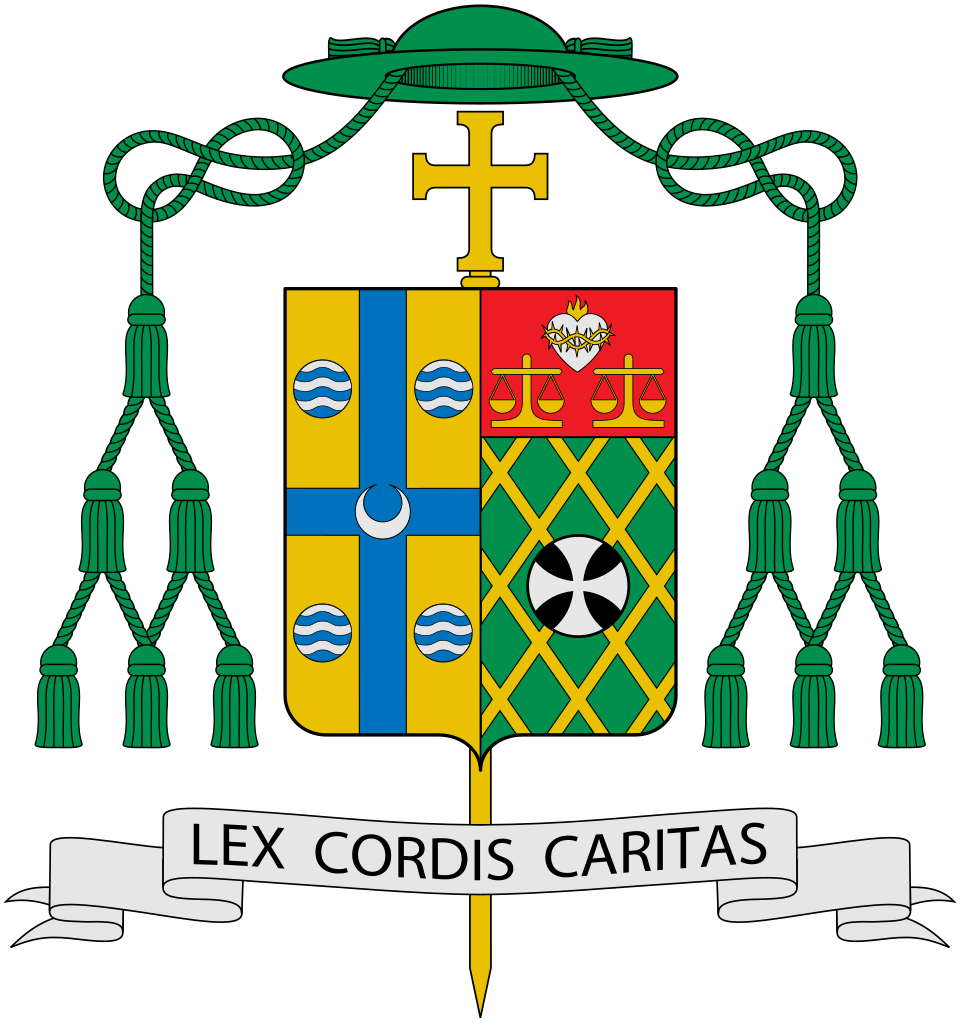
Thomas J. Paprocki
Thomas John Joseph Paprocki was born on August 5, 1952, in Chicago, the third of nine children of Polish-American parents, raised around his father's pharmacy, where all seven boys worked. He learned Latin, Polish, and English early, entered Quigley Seminary South at fourteen, and took a bachelor's in political science from Niles College. He studied at St. Mary of the Lake Seminary in Mundelein and was ordained a priest of Chicago on May 10, 1978, by Cardinal John Cody.
Paprocki's priesthood took a double track that never really separated. Three months after ordination he entered DePaul law school, was admitted to the Illinois Bar in 1981, and co-founded the South Chicago Legal Clinic for the poor in a declining steel-mill neighborhood. He became Chicago's vice-chancellor in 1985 and chancellor in 1992, and completed a doctorate in canon law at the Gregorian University in 1991. Pope John Paul II named him an auxiliary bishop of Chicago in January 2003, and he was consecrated on March 19, 2003, overseeing some sixty parishes.
Pope Benedict XVI appointed him the ninth Bishop of Springfield in Illinois on April 20, 2010, and he was installed on June 22, 2010. He is, by temperament and training, a decree bishop: where other bishops issue statements, Paprocki writes particular law, whether on marriage discipline in 2017 or on the old Mass in 2021, and then defends it in public when Rome pushes back. He plays hockey, sings from the pulpit, and speaks five languages. The canon lawyer who once ran a legal clinic for the poor is now one of the episcopate's most legally literate defenders of traditional liturgy.
- 2021-07-19Decree implementing Traditionis Custodes: invoking canon 87, section 1, Paprocki dispensed St. Rose of Lima Church, Quincy (FSSP personal parish), and Sacred Heart Church of St. Katharine Drexel Parish, Springfield (Canons Regular of the Society of St. John Cantius), from Article 3, section 2, authorizing the 1962 Missal at those parish churches on any or all days of the year. The decree also authorized priests already celebrating the 1962 Missal in the diocese to continue on request, and determined that the FSSP, the Canons Regular of St. John Cantius, and the Canons Regular of St. Thomas Aquinas in the diocese did not deny the validity of the liturgical reform. ↗
- 2022-01-26Joint Springfield/SJC arrangement: the Canons Regular of St. John Cantius serving in Springfield would celebrate the Novus Ordo on first Sundays, aligning them with the policy of their Chicago archbishop. This reduced the old-rite Sundays at Sacred Heart by one Sunday a month; it was presented as a joint agreement with the canons' own superiors, not as a Paprocki decree, and both dispensed sites continued. Recorded here so the reduction is not hidden; it does not overturn the preserved verdict. ↗
- 2023-02-24After Cardinal Roche's February 21, 2023 rescript reserving parish-church dispensations to the Holy See and ordering bishops who had issued them to inform the dicastery, Paprocki publicly defended the Springfield Latin Mass community as faithful Catholics and argued that local bishops are better placed than a Roman office to judge their dioceses. Public advocacy, not a new governing act; no published Roman ratification or revocation of the Springfield dispensation was found. ↗
- 2026-02-08St. Rose of Lima, Quincy, bulletin shows the FSSP personal parish still celebrating the 1962 Roman Rite on Sundays and weekdays in February 2026. Current-operation evidence only. ↗
Paprocki answered Traditionis Custodes in three days, and he answered it in law. On July 19, 2021, invoking canon 87, section 1, he dispensed two parish churches from Article 3, section 2 of the motu proprio, authorizing the Roman Missal of 1962 at St. Rose of Lima in Quincy, a personal parish under the Priestly Fraternity of St. Peter, and at Sacred Heart in Springfield, served by the Canons Regular of the Society of St. John Cantius, on any or all days of the year. The decree was unique among the early American responses in being a decree with canonical dispensations rather than a statement of intent, and it also authorized priests already celebrating the old Missal in the diocese to continue on request.
The dispensation was not unconditional in practice. The readings were to be proclaimed in the vernacular, as the motu proprio itself requires, and in January 2022 the Canons Regular serving in Springfield, under a joint arrangement aligning them with their Chicago archbishop's policy, began celebrating the Novus Ordo on first Sundays, trimming the old-rite Sundays at Sacred Heart by one a month. When Rome's February 2023 rescript reserved parish-church dispensations to the Holy See, Paprocki publicly defended his Latin Mass faithful and questioned the rescript's wisdom, but no published Roman decision on Springfield's dispensation has been found. The Quincy bulletins of early 2026 show the FSSP parish still offering a full weekly 1962 schedule, so the dispensation's fruits survived into the as-of year.
The verdict is preserved, at high confidence. Paprocki's own governing act kept both named parish churches in the 1962 Missal when the letter of Traditionis Custodes would have barred them as parish churches, and neither site was suppressed under him. The first-Sunday Novus Ordo arrangement and the unresolved Roman question are real qualifications, and they are stated here rather than smoothed over, but they do not amount to a suppression or a reduction of sites.