The Society of St. Pius X Is Founded
With a local bishop’s blessing and a seminary in an Alpine village, an old missionary archbishop set out to form priests in the ancient rite — a beginning that was wholly canonical, and a road that would not stay so.
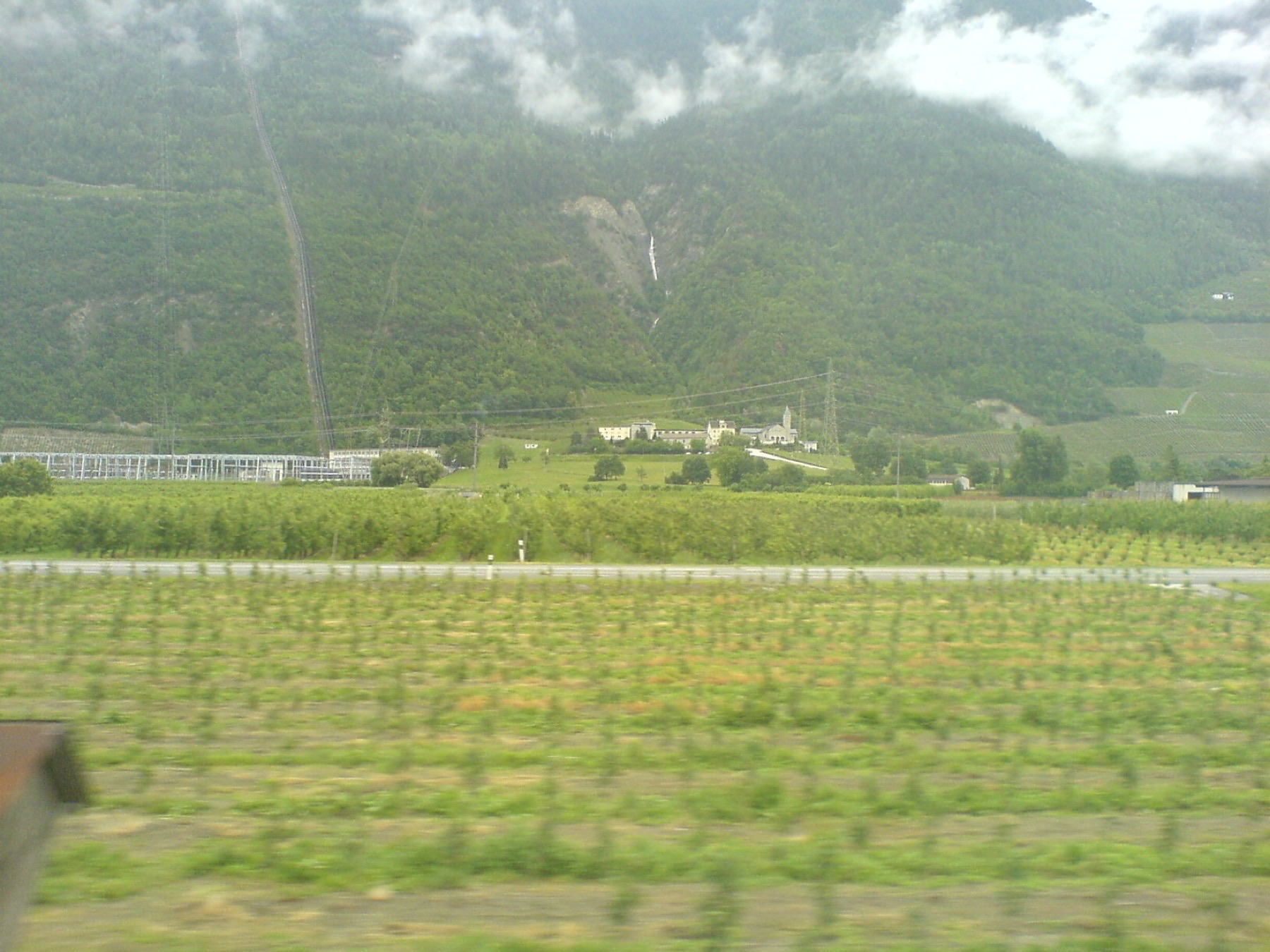
The seminary of the Society of St. Pius X at Écône, in the Swiss canton of Valais. On 1 November 1970 Bishop François Charrière of Lausanne, Geneva and Fribourg canonically erected the Society as a «pious union» to form priests in the traditional Roman rite. Photo: Jamcib, public domain.
Event 38 of 57
On 1 November 1970 (the feast of All Saints) Bishop François Charrière of Lausanne, Geneva and Fribourg signed a decree erecting the Priestly Society of St. Pius X as a pia unio, a “pious union,” in his Swiss diocese. The founder was Archbishop Marcel Lefebvre, not a cardinal, as he is sometimes miscalled, but a retired missionary archbishop and former superior general of the Holy Ghost Fathers, a man who had spent decades in Africa and had sat among the Council Fathers at Vatican II. His aim was simple and, in itself, unobjectionable: to form priests soundly, in the traditional Roman rite, at a time when seminaries across the West were emptying and the liturgy was in upheaval. The seminary opened at Écône, a village in the Valais. The beginning was entirely above board. What followed would become the most consequential, and the most painful, institutional response to the post-conciliar crisis.
A Wholly Canonical Beginning
It cannot be said too plainly: the Society of St. Pius X was founded with the approval of legitimate Church authority. A pia unio is the ordinary first stage through which a new Catholic association passes on its way toward fuller recognition; Bishop Charrière erected it under his own ordinary power, ad experimentum for six years, and approved its statutes. Within months the work drew warm words from Rome. In a letter of 18 February 1971, Cardinal John Wright, Prefect of the Sacred Congregation for the Clergy, praised the Society’s statutes and its purpose, judging that it could “contribute much” to the worldwide formation and sharing of clergy. Seminarians came. Priests were ordained. For its first years the SSPX was exactly what it appeared to be: a recognized society doing recognized good.
Having read the request presented to us by His Excellency Archbishop Marcel Lefebvre, and the statutes annexed to it… we, Bishop of Lausanne, Geneva and Fribourg, erect canonically in our diocese, as a «pia unio,» the Priestly Society of St. Pius X.
— Bishop François Charrière, decree of erection, 1 November 1970 (trans.)
That this approval was real matters enormously for telling the story honestly. The SSPX did not spring up as a breakaway sect. It began inside the Church, with a bishop’s signature, in the months just after the new Order of Mass had been promulgated. Its earliest years were a genuine and fruitful labor of priestly formation.
The Man and His Conviction
Marcel Lefebvre was, by any measure, a courageous churchman. As Apostolic Delegate for French-speaking Africa and then Superior General of his congregation, he had governed missions and formed clergy on a grand scale. He came to Écône convinced that the surest gift he could give the Church in crisis was priests who knew the old rite and the old discipline. That conviction was not, in 1970, a rejection of Rome. It was an attempt to serve her in a hard season.
Whatever one concludes about the later canonical history, the SSPX preserved the traditional Latin Mass and formed thousands of priests through decades when both were widely abandoned. Many faithful kept the older rite alive because these chapels kept its doors open. A Catholic in communion with Rome can acknowledge that good plainly — gratitude for what was preserved is not endorsement of every later decision.
Where the Road Turned
The harmony did not last, and candor requires saying why. After an Apostolic Visitation of the seminary in November 1974, Lefebvre published a stinging Declaration (he later admitted it was written “in a spirit of doubtlessly excessive indignation”) that sharply rejected the “neo-Modernist and neo-Protestant tendencies” he saw at work in the post-conciliar reforms. Relations with Rome deteriorated. On 6 May 1975 the local ordinary, Bishop Pierre Mamie (Charrière’s successor), with Roman approval, withdrew the Society’s pia unio status. Lefebvre regarded the suppression as invalid and continued. After he ordained men at Écône in defiance of an order not to, Pope St. Paul VI’s authorities imposed on him a suspension a divinis in July 1976, a grave canonical penalty barring him from exercising priestly orders.
We hold fast, with all our heart and with all our soul, to Catholic Rome, Guardian of the Catholic Faith and of the traditions necessary to preserve this faith, to Eternal Rome, Mistress of wisdom and truth.
— Archbishop Marcel Lefebvre, Declaration of 21 November 1974
The deepest rupture came later still. On 30 June 1988, despairing of an accord with Rome and fearing for the Society’s future, Lefebvre consecrated four bishops at Écône without the papal mandate the law requires. Pope St. John Paul II had personally warned against it. The act incurred, by the very law of the Church, the automatic (latae sententiae) excommunication of Lefebvre and the four men, declared the next day by Cardinal Bernardin Gantin. The Pope, in the Apostolic Letter Ecclesia Dei, called the consecrations a “schismatic act” and lamented it as a wound. From that day the SSPX stood in a separated, irregular canonical situation, not, on the Church’s own subsequent judgment, a formal heresy or a parallel church, but a society whose ministry was not exercised legitimately.
The 1988 consecrations were unauthorized; the excommunications were real; the Society has had no canonical status in the Church since 1975. None of this can be wished away. Equally, none of it licenses the sedevacantist error: the SSPX itself has never denied that the reigning Pope is the Pope, and Domus Dei never does either. The reformed rite is valid and licit, that is the floor. One may grieve the breach without rebelling against the authority that names it a breach.
The Long Aftermath
The story did not end in 1988, and its later chapters belong to the cause of communion. In 2009 Pope Benedict XVI lifted the excommunications of the four surviving bishops, while making clear that the Society still possessed no canonical status and that its ministers did not legitimately exercise a ministry until the underlying doctrinal questions were resolved. In 2015 and 2017 Pope Francis granted, as pastoral provisions, the faculty for SSPX priests to absolve validly in confession and (with the local bishop’s authorization) to witness marriages. These were genuine gestures toward healing, not a grant of full regularization, which has not occurred.
The SSPX is best understood as both a real good and a real wound. It began with canonical approval and did lasting service in forming priests and preserving the ancient rite; it also, through later defiance, placed itself in a separated and irregular situation that successive Popes have sought to heal. To present it as purely heroic is to ignore the 1976 suspension and the 1988 consecrations. To present it as purely schismatic is to ignore the lawful 1970 erection and the steps toward reconciliation since. The honest verdict holds both, and prays for the day the wound is closed.
Pope St. Paul VI had warned Lefebvre, in a letter of 11 October 1976, that obedience was not optional even amid disorder. Lefebvre died in 1991, still estranged. Yet the Mass he labored to preserve is no longer endangered as it once seemed; Pope Benedict’s Summorum Pontificum would one day declare that the older rite had never been abrogated. The deepest hope a faithful Catholic can hold for the Society is the one Rome herself has repeatedly expressed: full and visible communion, the rite secure and the breach healed.
Events That Led Here
- Bishop François Charrière, Decree erecting the Priestly Society of St. Pius X as a pia unio, 1 November 1970 (Diocese of Lausanne, Geneva and Fribourg)
- Cardinal John Wright, Letter of the Congregation for the Clergy praising the Society’s statutes, 18 February 1971
- Archbishop Marcel Lefebvre, Declaration of 21 November 1974
- Pope St. Paul VI, Letter to Archbishop Lefebvre, 11 October 1976
- Sacred Congregation for Bishops, suspension a divinis of Archbishop Lefebvre, 22 July 1976
- Pope St. John Paul II, Apostolic Letter Ecclesia Dei (motu proprio), 2 July 1988
- Cardinal Bernardin Gantin, Decree declaring the latae sententiae excommunications, 1 July 1988
- Pope Benedict XVI, Letter to the Bishops of the Catholic Church concerning the remission of the excommunication of the four bishops, 10 March 2009
- Congregation for the Doctrine of the Faith, faculties for confessions (2015) and marriages (2017)