Cardinal Ratzinger’s Critiques
Through the 1990s the Church’s chief guardian of doctrine became the most authoritative critic of how the reform had been carried out — never doubting the new rite’s validity, yet grieving that a liturgy grown over centuries had been treated as a thing to be manufactured.
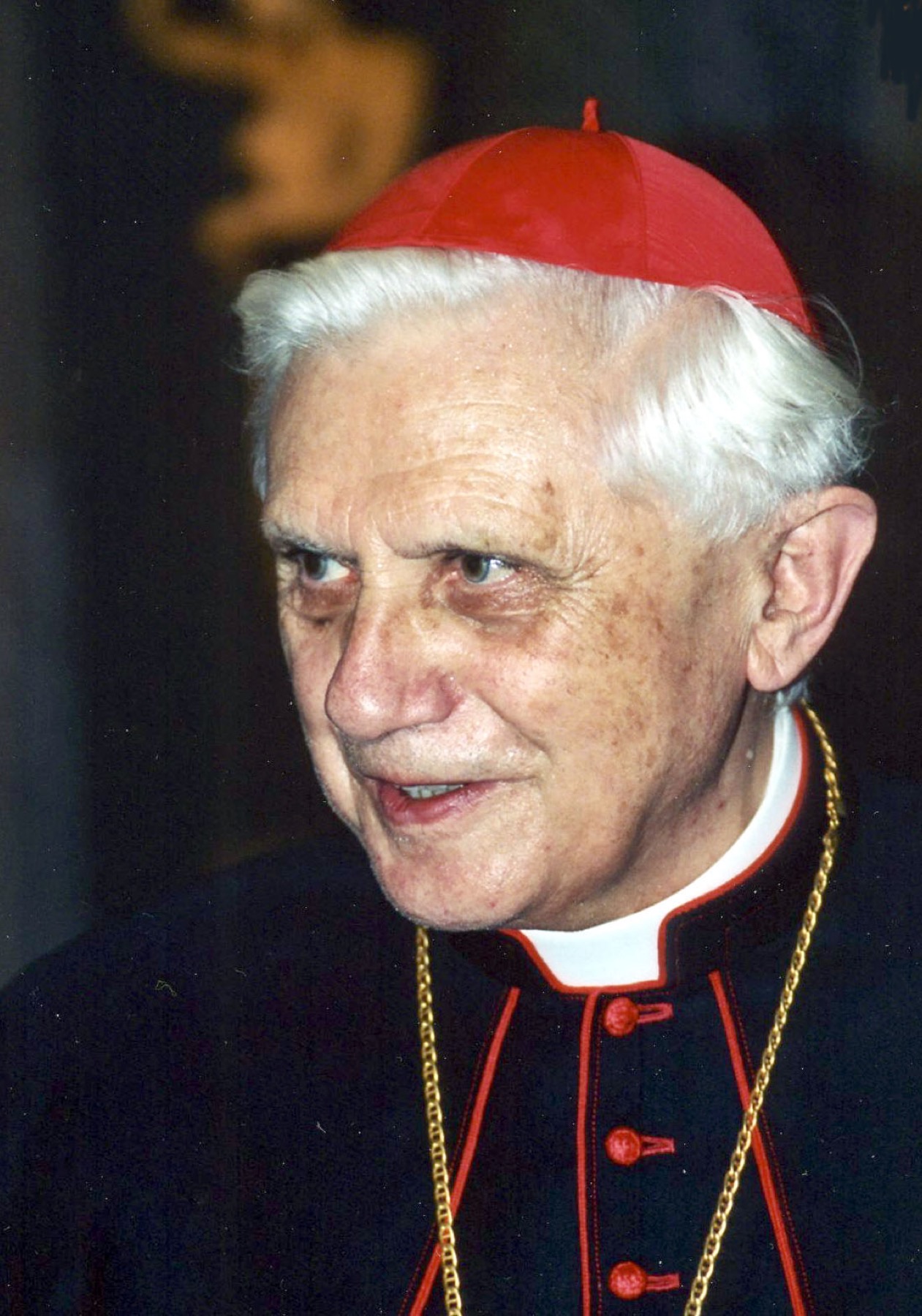
Joseph Cardinal Ratzinger, Prefect of the Congregation for the Doctrine of the Faith, whose writings of the 1990s — above all his 1992 Preface to Klaus Gamber’s The Reform of the Roman Liturgy and his 1997 memoir Milestones — became the most authoritative critique of how the liturgical reform was executed. The future Benedict XVI never denied the validity of the reformed rite; he lamented the manner of its making and laid the groundwork for a “reform of the reform.” Photo: Manfredo Ferrari, CC BY-SA 4.0, via Wikimedia Commons.
Event 46 of 57
By the early 1990s the most authoritative voice raised against the way the liturgical reform had been carried out belonged not to a rebel on the margins but to the man at the doctrinal center of the Church: Joseph Cardinal Ratzinger, Prefect of the Congregation for the Doctrine of the Faith and the future Pope Benedict XVI. In a series of books and prefaces (The Feast of Faith, the 1992 Preface he wrote for the German scholar Klaus Gamber, and his 1997 memoir Milestones) he gave the traditional concern an intellectual weight it had never before possessed. His critique was precise, and its precision is the whole point: he never questioned that the new Mass was valid, licit, and truly the Mass. What he questioned was the process by which it was made and the manner in which it was too often celebrated. From this distinction the entire program of a “reform of the reform” would later grow.
“A Banal On-the-Spot Product”
The single most famous line came in 1992. The German liturgist Klaus Gamber had published a closely argued study, Die Reform der römischen Liturgie (The Reform of the Roman Liturgy), contending that the post-conciliar reform had broken with the principle of organic development that had always governed the Roman Rite. When the book appeared in French, Cardinal Ratzinger wrote the Preface, and in it he framed the deepest charge of the whole traditional movement in a single, unforgettable image. He did not say the new rite was invalid. He said that the way it had been produced amounted to a manufacture, where there should have been a living growth.
What happened after the Council was something else entirely: in the place of liturgy as the fruit of development came fabricated liturgy. We abandoned the organic, living process of growth and development over centuries, and replaced it, as in a manufacturing process, with a fabrication, a banal on-the-spot product.
— Joseph Cardinal Ratzinger, Preface to Klaus Gamber, The Reform of the Roman Liturgy (1992)
This famous sentence is endlessly misquoted: sometimes attributed to Gamber, sometimes torn from its context to suggest the Cardinal thought the new Mass invalid or false. Neither is true. The words are Ratzinger’s own, from his Preface to Gamber’s book, not from Gamber. And the charge is aimed squarely at the process of reform, the substitution of fabrication for organic growth, not at the validity of the rite that resulted. The same Cardinal Ratzinger would, as Pope Benedict XVI, celebrate the reformed Mass and defend its legitimacy. To honor this critique is never to despise the Novus Ordo or the Popes who gave it.
The Lament of Milestones
Five years later, in his 1997 autobiography Milestones: Memoirs 1927–1977, the Cardinal turned from the abstract to the personal. He recalled the moment the older Missal was set aside as the Church’s ordinary worship, and he did not hide his distress. A liturgy that had grown across the centuries from the sacramentaries of the ancient Church, he wrote, had been treated as though it were merely the product of expertise and legal power, and that, he believed, had done the Church real harm. He took care, as always, to grant that the new Missal brought genuine improvement and enrichment; the wound was not the new books but the rupture in the manner of their imposition.
There is no doubt that this new Missal in many respects brought with it a real improvement and enrichment; but setting it as a new construction over against what had grown historically, forbidding the results of this historical growth, thereby makes the liturgy appear to be no longer a living development but the product of erudite work and juridical authority; this has caused us enormous harm.
— Joseph Cardinal Ratzinger, Milestones: Memoirs 1927–1977 (Ignatius, 1998), p. 148
He went further than mere regret. The abrupt prohibition of the old rite, he observed, was something that had simply never happened before in the entire history of the liturgy: rites had always grown, been pruned, and developed, but a reigning Missal had never been so completely forbidden overnight. For Ratzinger this break carried consequences he was unwilling to minimize, and in the most sobering sentence of the memoir he tied the whole crisis of the post-conciliar Church to what had been done to her worship.
❝I am convinced that the crisis in the Church that we are experiencing today is to a large extent due to the disintegration of the liturgy, which at times has even come to be conceived of etsi Deus non daretur: in that it is a matter of indifference whether or not God exists and whether or not he speaks to us and hears us.
— Joseph Cardinal Ratzinger, Milestones (Ignatius, 1998), pp. 148–149
The Closed Circle
Ratzinger’s critique reached also into the manner of celebration. In The Feast of Faith and later in The Spirit of the Liturgy (2000), he challenged one of the most visible changes of the reform: the priest celebrating versus populum, facing the people across the altar. The older posture, priest and people together facing East, ad orientem, had never meant, he insisted, that the priest “had his back to the people”, as if he were rude or indifferent to them. It meant that priest and people were a pilgrim community turned together toward the Lord who comes. To make the altar a table over which celebrant and congregation face one another, he warned, risked turning the assembly into a self-enclosed circle, shut in upon itself rather than opened out toward God.
Notice the spirit of the man. Ratzinger raised every one of these objections from within the Church’s highest councils, as the cardinal charged with guarding her doctrine — not against her, and never in schism. He upheld the validity and the legitimacy of the reformed rite without flinching. His remedy was never to abolish the new Mass but to heal it: to recover reverence, continuity, and the sense of worship directed to God. This is the model the traditional movement most needs, love for the old rite and obedience to the living Church, held together without contradiction.
The Seed of the Reform of the Reform
What makes the writings of the 1990s pivotal is that they were not the end of a complaint but the beginning of a program. Ratzinger was not content to mourn; he was building the intellectual case for repair. If the reform had erred by treating the liturgy as a fabricated product, the answer was to restore the lost principle of organic continuity: to read the Council and its liturgy not as a rupture with the Catholic past but as renewal within an unbroken tradition. That conviction, articulated as Prefect, became policy when he became Pope. The same logic runs straight from the 1992 Preface to the 2000 Spirit of the Liturgy, and from there to Summorum Pontificum in 2007, where Benedict XVI declared the older Missal “never abrogated” and set the two forms side by side as expressions of one Roman Rite.
Before Ratzinger, the charge that the reform had been “fabricated” could be dismissed as the grievance of nostalgics. After Ratzinger, it carried the authority of the Church’s chief theologian and future Pope. He gave the traditional concern a vocabulary (organic development versus fabrication, the community turned toward the Lord versus the closed circle; later, as Pope, he would set a “hermeneutic of reform” against a “hermeneutic of discontinuity and rupture”), and he did it without ever leaving communion or denying the validity of the rite he criticized. The “reform of the reform” was born here, in the patient, precise critiques of the 1990s.
When the story of the traditional revival is told, the decade of the 1990s is the hinge. The future Benedict XVI took the deepest intuition of the movement (that worship must be received as a living inheritance, not manufactured anew), and made it speakable inside the Church herself. The old Mass would find its juridical home in 2007; but its intellectual home was built first, in the study of a German cardinal who loved both the ancient liturgy and the Church that had reformed it.
- Joseph Cardinal Ratzinger, Preface to Klaus Gamber, The Reform of the Roman Liturgy: Its Problems and Background (Eng. ed., Una Voce Press / Foundation for Catholic Reform, 1993; French Preface 1992), “a fabrication, a banal on-the-spot product”; “in the place of liturgy as the fruit of development came fabricated liturgy.” NOTE: the words are Ratzinger’s own, from his Preface, NOT Gamber’s text.
- Joseph Cardinal Ratzinger, Milestones: Memoirs 1927–1977 (San Francisco: Ignatius Press, 1998; first published in Italian, 1997), pp. 146–149, “a real improvement and enrichment… product of erudite work and juridical authority; this has caused us enormous harm” (p. 148); “the crisis in the Church… due to the disintegration of the liturgy… etsi Deus non daretur” (pp. 148–149); the banning of the old Missal as without precedent in liturgical history.
- Joseph Ratzinger, The Feast of Faith: Approaches to a Theology of the Liturgy (Ignatius Press, 1986; German Das Fest des Glaubens, 1981), the priest facing the people and the self-enclosed “closed circle”; the meaning of ad orientem.
- Joseph Ratzinger, The Spirit of the Liturgy (Ignatius Press, 2000), the recovery of liturgical orientation; “turning toward the Lord,” not “celebration toward the wall”; the program of continuity that matured into the reform of the reform.
- Benedict XVI, Letter to the Bishops of the Catholic Church accompanying Summorum Pontificum, 7 July 2007 (vatican.va) — “What earlier generations held as sacred…”; the 1962 Missal never juridically abrogated.