Archbishop Lefebvre Suspended
After he ordained priests against Rome’s explicit instructions, Pope Paul VI suspended Archbishop Marcel Lefebvre a divinis — a real canonical penalty that barred him from exercising his orders, and a tragic hardening of a breach that two devout men could not close.
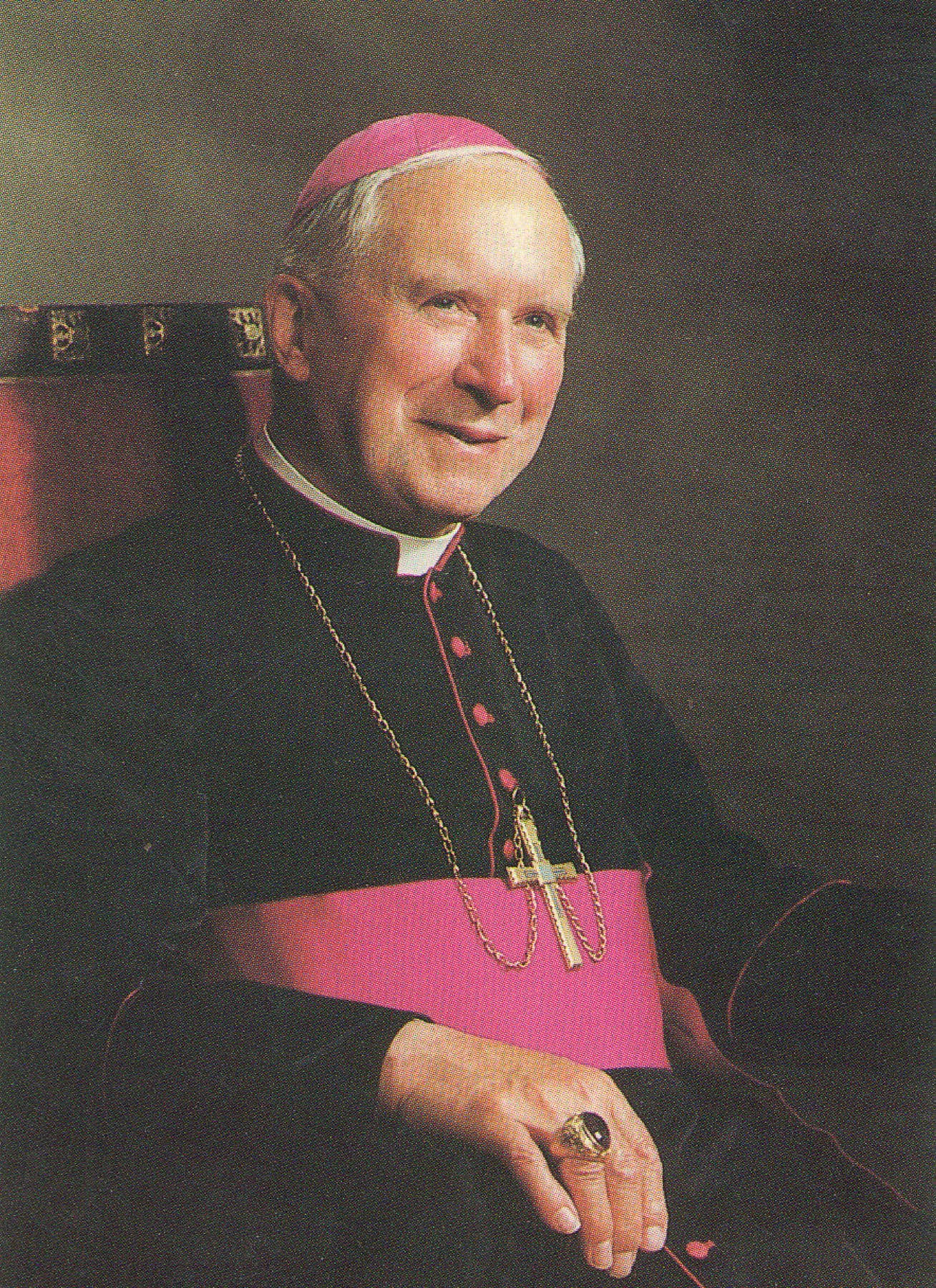
Archbishop Marcel Lefebvre (1905–1991), founder of the Society of St. Pius X. In the summer of 1976 he ordained priests at Écône without canonical mandate and against Rome’s express order; on 22 July Pope Paul VI suspended him a divinis. Photo: Jim, the Photographer, CC BY 2.0, via Wikimedia Commons.
Event 42 of 57
Marcel Lefebvre was no fringe agitator. He had been Archbishop of Dakar, Apostolic Delegate for French-speaking Africa, and Superior General of the Congregation of the Holy Ghost: a missionary prelate of the first rank, a Father of the Second Vatican Council, a man whose love for the priesthood and the old Roman Rite was unfeigned. (He was an archbishop, never a cardinal.) That is precisely what makes the events of 1976 a tragedy rather than a mere disciplinary footnote. Here was a faithful-hearted shepherd, alarmed by what he saw happening to the Mass and the seminaries, who chose to defend tradition by a means the Church could not bless: open defiance of the lawful authority of the Pope. The result was a penalty that was entirely real, and a wound that has not yet healed.
The Hot Summer of 1976
Lefebvre had founded the Society of St. Pius X in 1970 at Écône, Switzerland, with the local bishop’s permission, to form priests in the older discipline and rite. By 1976 Rome’s patience with the Society’s independent course had run out. When Lefebvre prepared to ordain a new class of priests that June, letters came from Rome forbidding him to proceed. He proceeded anyway. On 29 June 1976 he ordained thirteen men to the priesthood at Écône: without the approval of the local bishop and in direct defiance of the explicit instruction not to. Catholics still call that season, with very different feelings on each side, the “Hot Summer of 1976.”
Lefebvre’s cause (the preservation of the traditional Mass and a reverent, doctrinally solid priesthood) is one this site holds dear. But his chosen method (ordaining priests without a canonical mandate, against the express order of the Pope) is not a path we commend. A good end does not sanctify defiance of the lawful authority Christ vested in Peter’s successor. The tragedy of 1976 is that the two could not be held together.
A Real Penalty: Suspension a Divinis
The response was swift and canonical. On 6 July 1976 Lefebvre incurred a suspension a collatione ordinum — forbidding him to confer holy orders. When he neither apologized nor relented, a fuller penalty followed: on 22 July 1976 he was suspended a divinis. This is no empty gesture. A suspension a divinis is a genuine canonical penalty that bars a cleric from exercising the powers of his orders altogether, from ordaining, from publicly offering Mass, from administering the sacraments licitly. Whatever one’s sympathies, honesty requires naming it plainly: a man under such a penalty is, in the Church’s law, forbidden to act as a priest in the very acts he most wished to perform.
A penalty by which a cleric is forbidden to exercise the power of orders he has received (to ordain, to celebrate Mass publicly, and to administer the sacraments) while the orders themselves remain.
— canonical description of the censure incurred by Archbishop Lefebvre, 22 July 1976
Paul VI’s Appeals
What is too often forgotten is how earnestly Paul VI sought to win Lefebvre back rather than simply to punish him. The Pope received the Archbishop in audience at Castel Gandolfo on 11 September 1976, and on 11 October 1976 he sent a long, personal, almost pleading letter. In it Paul VI met Lefebvre’s deepest claim (that he was the true defender of Tradition) head on, and answered it with the Church’s own understanding of what Tradition is.
❝Tradition is not a rigid and dead notion, a fact of a certain static sort which at a given moment of history blocks the life of this active organism which is the Church.
— Pope Paul VI, letter to Archbishop Lefebvre, 11 October 1976
And to the Archbishop’s argument that he could be faithful to the Church simply by keeping the older norms, the Pope replied with a sharp and searching question about where the living authority of Peter actually resides:
You say that you are subject to the Church and faithful to tradition by the sole fact that you obey certain norms of the past that were decreed by the predecessor of him to whom God has today conferred the powers given to Peter.
— Pope Paul VI, letter to Archbishop Marcel Lefebvre (11 October 1976)
It would be as wrong to vilify Lefebvre as it would be to canonize his disobedience. His concerns about the manner and fruits of the reform (emptied seminaries, banalized worship, a collapse of vocations) were shared by faithful Catholics who never left communion, and many of them have since been vindicated by Rome’s own later generosity toward the old rite. The Church that disciplined him also kept reaching for him: Paul VI’s letters are the words of a father, not a prosecutor. The grief of 1976 belongs to everyone who loves both Tradition and the visible unity of the Church.
The Breach Widens
Lefebvre signed nothing. He accepted neither the documents of the Council “in their obvious meaning” as the Pope asked, nor the reformed rites, nor the censure. The SSPX simply continued (ordaining, building, operating) as though the suspension had no force. What began as a dispute over seminary discipline and liturgical preference had become a standing rupture between the Society and the Holy See, one that the consecration of bishops in 1988 at Écône would deepen into a formal canonical crisis. The road from 1976 runs straight to that day. It is a road this site charts with sorrow, not satisfaction, the story of a man who loved the right things and chose the wrong way to defend them.
If there is a lesson here for the friends of the traditional Mass, it is the one Paul VI pressed and the one this site holds: that the cause of Tradition is never advanced by setting oneself against the successor of Peter. The TLM’s vindication, when it came, came not through defiance but through patience, through the 1984 indult and, later, Summorum Pontificum, granted by the very authority Lefebvre felt he had to defy.
- Pope Paul VI, Letter to Archbishop Marcel Lefebvre (11 October 1976), English text via Word on Fire (wordonfire.org) and Where Peter Is (wherepeteris.com)
- “The Hot Summer of 1976 and Archbishop Lefebvre,” SSPX District of the USA (sspx.org): SSPX account of the 29 June ordinations, the 6 July and 22 July suspensions, and the 11 September Castel Gandolfo audience
- “Marcel Lefebvre,” Encyclopaedia Britannica and Wikipedia, biographical record (Archbishop of Dakar; Superior General of the Holy Ghost Fathers; founder of the SSPX, 1970) and the chronology of the 1976 ordinations and suspensions
- Bernard Tissier de Mallerais, Marcel Lefebvre: The Biography (Angelus Press), for the Castel Gandolfo dialogue of 11 September 1976