Quattuor Abhinc Annos
Fifteen years after the old Mass had all but vanished from public life, John Paul II quietly reopened a door that had seemed shut for good — the first official permission, hedged and cautious, for the 1962 Missal to be celebrated again.
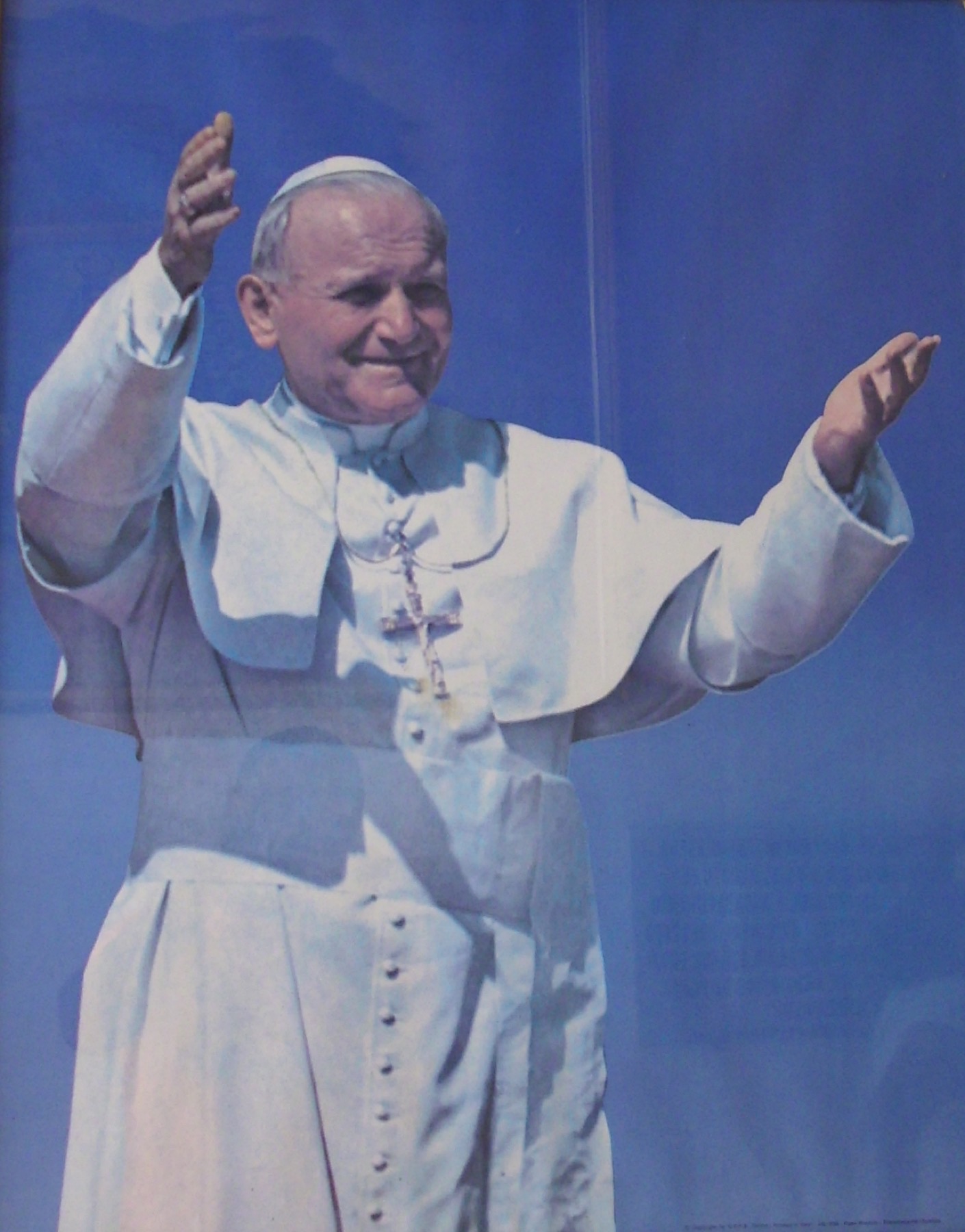
Pope St. John Paul II, who in October 1984 authorized the Congregation for Divine Worship to issue Quattuor Abhinc Annos — the first indult permitting bishops to allow the 1962 Roman Missal since the reform took hold. Photo: Chuck Fishman, public domain.
Event 43 of 57
For fifteen years the traditional Roman Mass had lived in the shadows. After the new Ordo Missae became obligatory across the Latin Church around 1969–1970, the Missal of the centuries was, for all practical purposes, gone from public worship — not formally abolished, but no longer provided for, no longer expected, no longer welcome in most parishes. Those who loved it were left to wonder whether they had any place left in the Church they had never dreamed of leaving. Then, on 3 October 1984, a short and carefully worded letter went out from Rome to the presidents of the world’s episcopal conferences. Its opening Latin words — Quattuor abhinc annos, “four years ago” — gave it its name. It was the first universal provision for the old Missal since the reform; England and Wales alone had had one, since 1971.
“Four Years Ago”
The title looked backward. Four years earlier, in 1980, John Paul II had asked the bishops of the world to report on how the reformed Missal of Paul VI had been received — and where, and why, some of the faithful still longed for the older rite. On the basis of the replies, the letter says, the problem “was almost completely solved”; “since, however, the same problem continues,” the Pope granted an indult. Quattuor Abhinc Annos was Rome’s answer: not a restoration, not a vindication, but a measured concession. The Congregation for Divine Worship, acting on the pope’s authority, granted diocesan bishops an indult — a special, revocable permission — to allow priests and groups who requested it to celebrate Mass according to the 1962 Missal promulgated by John XXIII.
Quattuor Abhinc Annos was the first time since the reform that Rome made room, the world over, for the old Mass to be celebrated in communion with the Church; a 1971 indult had already done so for England and Wales. It conceded almost nothing in principle — the rite was tolerated, not affirmed — yet in practice it changed everything: it established that the 1962 Missal could be permitted, and once a thing can be permitted, the only remaining question is how widely. The door that had been slammed in 1969 was now, however narrowly, ajar.
The Conditions
The indult was hedged about with strict conditions, and reading them honestly matters, for they reveal both Rome’s caution and Rome’s pastoral anxiety. The permission was to be exercised only by the local bishop, only for groups that asked for it, and only on terms he set. Three conditions in particular defined its narrow shape.
First, and most pointedly, the faithful who availed themselves of it had to make publicly clear that they did not share the positions of those who denied the legitimacy of the reformed rite. This was the indult’s doctrinal price of admission — aimed squarely at the growing rejectionist current associated with Archbishop Lefebvre. Second, the old Mass was not to be celebrated in ordinary parish churches, but in places the bishop designated, except where he judged an extraordinary case warranted otherwise. Third, the celebration had to follow the 1962 books faithfully and in Latin, with no mixing of the old and new rites.
That it be made publicly clear beyond all ambiguity that such priests and their respective faithful in no way share the positions of those who call in question the legitimacy and doctrinal exactitude of the Roman Missal promulgated by Pope Paul VI in 1970.
— Congregation for Divine Worship, Quattuor Abhinc Annos, condition (a), trans.
These were not generous terms. The Mass of the ages was being granted as a tightly supervised exception, available only to those who first professed the legitimacy of the rite that had displaced it, and kept out of the ordinary worshipping life of the parish. Critics on both sides found something to dislike: traditionalists who wanted recognition of a right received instead a grudging permission, while some bishops resented even this much. Yet the principle conceded was larger than the concession itself.
A Crack, Not a Floodgate
The lived results were modest. Many bishops applied the indult narrowly or not at all; the “not in parish churches” clause kept the old Mass at the margins, in chapels and side altars and out-of-the-way hours. The very requirement to disavow the rejectionist position made some attached to the old rite wary of asking. For all that, communities did form under its shelter — small congregations that gathered, week by week, around a Mass they had been told was finished — and those communities became the seedbed of everything that followed.
It is worth saying plainly what Quattuor Abhinc Annos was: an act of the Roman Pontiff, exercised through the Congregation for Divine Worship and the bishops, entirely within the Church. This was not a concession wrung from Rome by rebellion but a mercy extended by Rome to the faithful. Whatever one makes of its strictness, it was John Paul II reopening, on his own authority, a door he believed should not have been bolted — and the door has only opened wider since.
Quattuor Abhinc Annos did not declare a right, did not judge the 1962 Missal preferable, and did not concede that it had ever remained lawful. It was a revocable permission, granted at each bishop’s discretion, conditioned on a public disavowal of those who questioned the new rite’s legitimacy. Reading it as a vindication of the traditional position mistakes a mercy for a verdict — and that reading has to be resisted precisely because the 2007 judgment, when it finally came, was so much stronger.
The Road to Summorum
Quattuor Abhinc Annos was the first link in a chain. Four years later, after Archbishop Lefebvre’s illicit episcopal consecrations in 1988, John Paul II issued Ecclesia Dei adflicta, widening provision for the traditional Mass and founding a pontifical commission to care for those attached to it who wished to remain in — or return to — full communion. And in 2007 Benedict XVI went to the root of the matter in Summorum Pontificum, writing in his Letter to the Bishops that accompanied it that “this Missal was never juridically abrogated and, consequently, in principle, was always permitted.” What 1984 had granted as a fragile exception, 2007 would affirm as something that had never truly been forbidden. But it began here — with a cautious letter, four short Latin words, and a pope unwilling to let the inheritance of centuries slip away entirely.
- (a) Disavowal Priests and faithful must make publicly clear they in no way share the positions of those who question the legitimacy and doctrinal exactitude of the Missal of Paul VI.
- (b) Place Only for groups that request it, in churches and oratories the bishop indicates — not parish churches, unless he permits it in extraordinary cases.
- (c) Books According to the 1962 Missal, and in Latin.
- (d) No mixing No interchanging of texts and rites of the two Missals.
- Reporting Each bishop had to inform the Congregation of concessions granted, and report after a year on the result.
- Issued by The Congregation for Divine Worship, on the authority of John Paul II.
- Pro-Prefect Augustin Mayer, O.S.B.
- Secretary Virgilio Noè.
- Form A letter to the presidents of the world’s episcopal conferences, not a motu proprio — part of why its reach depended entirely on each bishop.
- Congregation for Divine Worship, Quattuor Abhinc Annos (3 October 1984), signed Augustin Mayer, O.S.B. (Pro-Prefect) and Virgilio Noè (Secretary) — English text via EWTN Library and Adoremus
- Pope John Paul II, Ecclesia Dei adflicta (2 July 1988) — vatican.va
- Pope Benedict XVI, Summorum Pontificum (7 July 2007) and, for the “never juridically abrogated” sentence, his accompanying Letter to the Bishops of the same date — vatican.va
- Latin Mass Society, “Quattuor Abhinc Annos (1984)” — background on the 1980 episcopal consultation that prompted the indult