The SSPX Excommunications Lifted
On 21 January 2009 Benedict XVI lifted the censure that had hung over four bishops since 1988 — a father’s outstretched hand toward reconciliation that, within days, a grave scandal would all but knock aside.
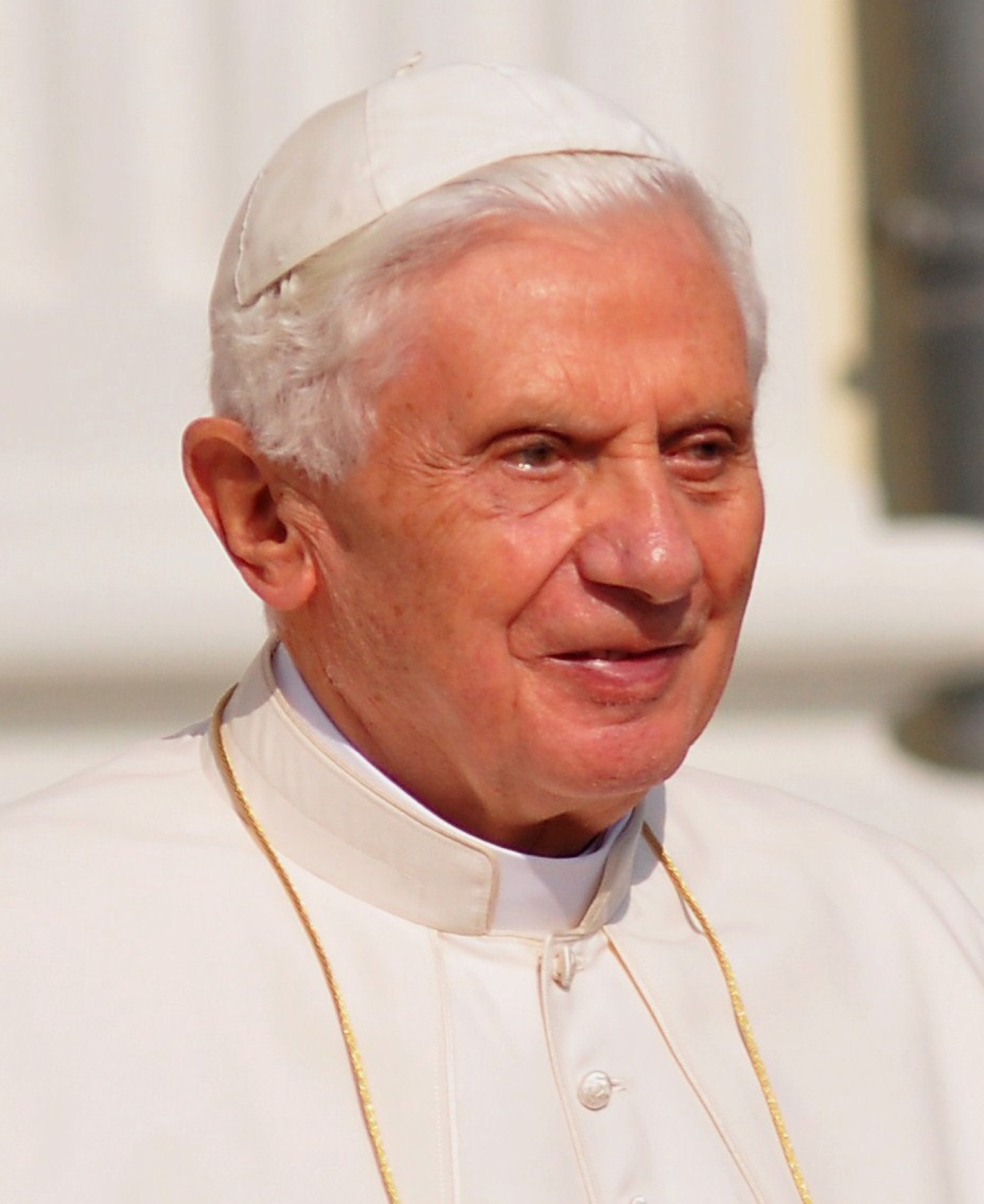
Pope Benedict XVI, who by a decree of the Congregation for Bishops dated 21 January 2009 remitted the 1988 excommunications of the four bishops consecrated by Archbishop Marcel Lefebvre — an act of mercy meant to open the road back to full communion for the Society of St. Pius X. Photo: Wolf-Dietrich Krause, CC BY-SA 3.0, via Wikimedia Commons.
Event 50 of 57
On 21 January 2009 the Congregation for Bishops, acting on a faculty “expressly granted” by Pope Benedict XVI, issued a decree remitting the latae sententiae excommunication that had fallen upon four bishops on 1 July 1988. Two days earlier these men had been consecrated at Écône by Archbishop Marcel Lefebvre without papal mandate; twenty years later the same Pope who, as Cardinal Ratzinger, had watched that rupture unfold now reached toward them in mercy. Bishops Bernard Fellay, Bernard Tissier de Mallerais, Richard Williamson and Alfonso de Galarreta were freed from the gravest of the Church’s penalties. Benedict intended it as the opening of a door — a costly gesture of reconciliation toward the Society of St. Pius X. Within days that goodwill was overtaken by scandal, and the road he had hoped to open would, in the end, stall short of its destination. This is the story of a Pope’s outstretched hand, and of why it did not yet reach.
What the Decree Did — and What It Did Not Do
It is essential to be precise, because the event was misreported at the time and has been misremembered since. Lifting the excommunications did not regularize the Society of St. Pius X. It did not restore the four bishops to the exercise of ministry, did not grant the Society’s priests faculties or a canonical mission, and did not give the SSPX any status in the Church’s law. The decree removed a personal censure, a penalty borne in conscience by four named men, as a first step toward dialogue. Everything else remained exactly where it had been. The Society was, and remained, in an irregular canonical situation.
The remission of the excommunication was a measure taken in the field of ecclesiastical discipline: the individuals were freed from the burden of conscience constituted by the most serious of ecclesiastical penalties. This disciplinary level needs to be distinguished from the doctrinal level. … Until the doctrinal questions are clarified, the Society has no canonical status in the Church, and its ministers (even though they have been freed of the ecclesiastical penalty) do not legitimately exercise any ministry in the Church.
— Benedict XVI, Letter to the Bishops of the Catholic Church, 10 March 2009
Benedict could not have stated it more plainly. The censure was lifted; the canonical question was untouched. To call 21 January 2009 the day the SSPX “came back” is simply false. It was the day a punishment was set aside so that a conversation might begin.
The Scandal That Overshadowed the Mercy
On the very day the decree was signed, a Swedish television channel broadcast an interview (recorded weeks earlier at the SSPX seminary in Zaitzkofen, Bavaria) in which Bishop Richard Williamson denied the Holocaust. He claimed that the historical evidence stood against the deliberate gassing of six million Jews, and that no Jews had died in gas chambers. The interview spread across the internet within days. The coincidence was catastrophic: a papal act of reconciliation and a bishop’s grotesque denial of one of history’s greatest crimes appeared, to the watching world, to be the same news story.
Holocaust denial is a lie and a grave moral evil. The systematic murder of roughly six million Jews is among the most thoroughly documented facts of modern history, and to deny it is to assault both the truth and the memory of the slaughtered. Bishop Williamson’s statements were indefensible, and nothing in this article’s sympathy for Benedict’s reconciling intent touches them. The Holy See itself made clear that Benedict had no knowledge of Williamson’s views when the excommunication was lifted, and that the bishop would have to repudiate his position “in an absolutely unequivocal and public” way before he could be admitted to any episcopal function. He never did, and the Society would later expel him.
It must be said clearly that the lifting of the censure had nothing to do with Williamson’s opinions on the Shoah; it concerned a 1988 disobedience over episcopal consecrations, and Benedict, by his own testimony, did not know of the broadcast. But the world did not pause to make distinctions, and the wound to the Church’s witness, and to her friendship with the Jewish people, was real.
A Pope Writes to His Bishops
What followed is among the most remarkable documents of Benedict’s pontificate. On 10 March 2009 he wrote a personal letter to every bishop of the Catholic Church, an act almost without precedent, in which he laid bare the “mishap,” defended his intention, and accepted his share of fault for how the affair had been handled. He thanked the Jewish friends who had helped clear up the misunderstanding and restore an atmosphere of trust. And he confessed his sorrow at being attacked not chiefly by outsiders but by Catholics who, he felt, should have known better.
❝At times one gets the impression that our society needs to have at least one group to which no tolerance may be shown; which one can easily attack and hate. … But if you bite and devour one another, take heed that you are not consumed by one another.
— Benedict XVI, Letter to the Bishops, 10 March 2009 (citing Galatians 5:15)
He explained, too, why he had undertaken the gesture at all, not from indifference to the harm, but from a shepherd’s refusal to abandon a community drifting from the Church. Could the Church, he asked, be totally indifferent toward a body of hundreds of priests and seminarians and the faithful in their care, and casually let them drift further away? Behind the whole affair stood what he named the supreme priority of his pontificate.
Leading men and women to God, to the God who speaks in the Bible: this is the supreme and fundamental priority of the Church and of the Successor of Peter at the present time. … The real problem at this moment of our history is that God is disappearing from the human horizon.
— Benedict XVI, Letter to the Bishops of the Catholic Church, 10 March 2009
Why the Reconciliation Stalled
The lifted censure was meant to clear the ground for doctrinal discussions, and those talks did follow, beginning in earnest in 2009 and continuing for years. But the same letter that explained the mercy also named the obstacle that would not move: the doctrinal questions, above all the Society’s acceptance of the Second Vatican Council and the Magisterium of the post-conciliar Popes, remained unresolved. The Holy See made the condition explicit, full recognition of the Council and of the teaching of the recent Pontiffs was “indispensable” for any future recognition of the Society. On that point agreement could not be reached. A doctrinal preamble offered in 2011–2012 was not accepted, and Benedict’s pontificate ended in February 2013 with the SSPX still in its irregular situation.
It would be easy, looking back, to read 2009 as a failure — a gesture poisoned by scandal and a reconciliation that did not arrive. But a father’s reaching out is not measured only by whether the son takes the hand. Benedict acted to remove a burden of conscience from four men and to make a conversation possible; he repudiated Holocaust denial without flinching; and he wrote to the whole Church in humility about his own part in the affair. The reconciliation stalled. The charity that sought it did not.
The lifting of the excommunications was never a regularization: it was the unlocking of a door, with the SSPX’s priests still lacking faculties and the Society still without canonical standing. Benedict held that door open at real cost to himself, even as the Williamson scandal slammed against it. He distinguished, with a theologian’s precision, between discipline and doctrine, between lifting a penalty and resolving a rupture. The work of full communion would pass, unfinished, to his successors. But 2009 stands as a witness that the office of Peter is, before all else, an office of mercy, and that mercy persists even when its hour does not yet come.
- Congregation for Bishops, Decree remitting the excommunication of the four bishops (Cardinal Giovanni Battista Re), 21 January 2009, remission of the 1 July 1988 latae sententiae excommunication of Bishops Fellay, Tissier de Mallerais, Williamson, de Galarreta (catholicculture.org; CNA/Vatican press)
- Benedict XVI, Letter to the Bishops of the Catholic Church concerning the remission of the excommunication of the four bishops consecrated by Archbishop Lefebvre, 10 March 2009 (vatican.va), disciplinary vs. doctrinal distinction; “no canonical status”; the Williamson “mishap”; Galatians 5:15; the supreme priority of leading men to God; gratitude to Jewish friends
- Secretariat of State, Note of 4 February 2009, condition that Williamson publicly and unequivocally distance himself from his position on the Shoah before admission to episcopal functions; full acceptance of Vatican II and the post-conciliar Magisterium as the indispensable condition for SSPX recognition (CNA; National Catholic Reporter; Haaretz)
- Richard Williamson interview recorded at Zaitzkofen, Bavaria; broadcast on Swedish television (SVT) on 21 January 2009. Holocaust-denying statements; subsequent German conviction for incitement (en.wikipedia.org/wiki/Richard_Williamson_(bishop); ECHR Williamson v. Germany)
- John Paul II, Ecclesia Dei adflicta, 2 July 1988, origin of the 1988 excommunications following the Écône consecrations (vatican.va)