Bugnini’s First Exile
The man who drafted the liturgy schema is passed over for the Council’s commission and loses his Roman chair — a conservative check that would last barely two years.
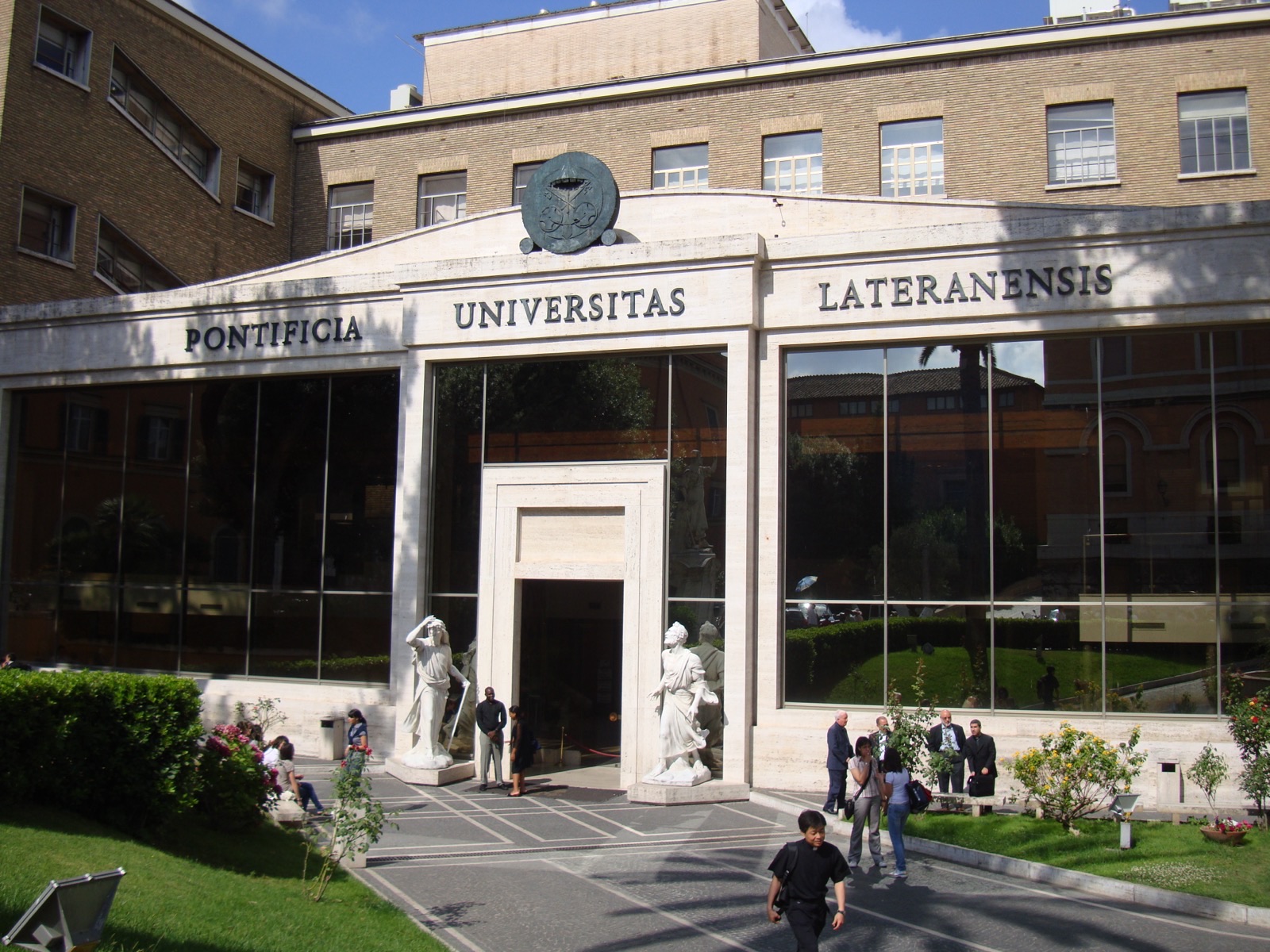
Father Annibale Bugnini, C.M., who in 1962 was passed over for secretary of the Council’s Liturgical Commission and removed from his chair at the Lateran — only to return, two years later, as the architect of the entire reform. Photo: calu777, CC BY 2.0, via Wikimedia Commons.
Event 24 of 57
In 1962 the priest who had steered the preparatory liturgy schema to a vote was not made secretary of the Council’s own Liturgical Commission (the post went to another man), and he lost his professor’s chair at the Lateran. It read at the time as a conservative pushback. Within two years he would be back, made Secretary of the body that rebuilt the Roman Rite. The “exile” was real; it was also remarkably brief.
On 6 June 1960, Pope John XXIII named Father Annibale Bugnini, C.M., secretary of the Pontifical Preparatory Commission on the Liturgy. For two years it was Bugnini’s commission in all but name: he organized its work, set its agenda, and shepherded its draft, the schema that would become Sacrosanctum Concilium, through to approval. By the standard logic of the Curia, the man who runs the preparatory body becomes secretary of the conciliar body that succeeds it. When the Second Vatican Council opened in October 1962, that did not happen. Bugnini was passed over. The reform’s most energetic organizer found himself, for the first time in years, on the outside of the room he had built.
The slight was unmistakable, and it came with a second blow. At roughly the same moment, Bugnini was removed from his chair of Liturgy at the Pontifical Lateran University in Rome. To the reformers it looked like a coordinated rebuff; to their opponents, like a prudent correction. Either way, the trajectory that had seemed unstoppable in early 1962 had been checked.
Passed Over for the Conciliar Commission
When the preparatory commissions gave way to the Council’s working commissions, the Conciliar Commission on the Sacred Liturgy needed a secretary. On 4 October 1962, John XXIII appointed Father Ferdinando Antonelli, O.F.M. (a careful, well-regarded liturgist of more conservative temper) to that post. Bugnini was assigned the lesser role of peritus, an expert consultant, on the same commission he had effectively led in its preparatory phase. The demotion was conspicuous precisely because of its symmetry: the secretary of the preparatory commission would ordinarily carry over. Bugnini did not.
His liturgical ideas were seen as too progressive.
— Archbishop Piero Marini, summarizing the 1962 removal of Bugnini from his chair at the Pontifical Lateran University
That single line, from a churchman who was himself a protege of Bugnini and a partisan of the reform, is the closest thing to an on-the-record reason. It frames the episode as exactly what it appeared to be: a judgment, from somewhere above, that Bugnini’s program ran ahead of where the Church was prepared to go in 1962. Who rendered that judgment, and on what grounds, is where the firm history ends and the disputed history begins.
Curial Politics — and What We Cannot Prove
It is tempting to draw a clean line from the Holy Office, the doctrinal congregation then led by the formidable Cardinal Alfredo Ottaviani, straight to Bugnini’s sidelining, and many accounts do. The setback is widely read as conservative pushback in the orbit of the Holy Office under John XXIII. That reading is plausible and may well be right. But the documentary record is thinner than the confident narratives suggest, and honesty requires saying so.
No official explanation for Bugnini’s 1962 removal was ever published. In his posthumous memoirs, Bugnini himself laid the blame on Cardinal Arcadio Larraona, calling the action unjust and based on unsubstantiated allegations, a partisan’s account that names a different villain than the Ottaviani-centered story usually told. Treat any single-cause explanation with care. What is certain is the fact of the demotion and the chair; the motive behind it remains contested.
What can be said with confidence is modest and solid. Bugnini was the only secretary of a major preparatory commission not carried forward as secretary of its conciliar successor. The decision had to have at least the acquiescence of John XXIII, a famously mild pope, which suggests the concern was taken seriously at the top. And the climate of 1962 (a Curia still dominated by men wary of rapid liturgical change) made a reformer of Bugnini’s reputation an obvious target for a check. Beyond that, the specific hand and the specific reasons are matters of reasonable historical dispute.
The Striking Restoration
Here the story turns. John XXIII died in June 1963; Cardinal Montini succeeded him as Pope Paul VI. The Council approved Sacrosanctum Concilium in December 1963 — the very document Bugnini’s preparatory commission had drafted. And on 30 January 1964, Paul VI appointed Bugnini secretary of the Consilium ad exsequendam Constitutionem de Sacra Liturgia, the council charged with carrying out the liturgical reform. The man passed over in 1962 was now the chief executive officer of the entire enterprise. From that post he would oversee the work that produced the new Order of Mass in 1969.
❝Sidelined as too progressive in 1962; made architect of the whole reform in 1964. The same qualities that got him removed got him recalled, once the man at the top had changed.
— The irony of the “First Exile”
The reversal is the most instructive thing about the episode. A career setback under one pope became, under his successor, a launching pad. Nothing about Bugnini’s convictions had changed; what changed was who held the keys. It is a clean window into how curial fortunes turn, not by argument won on the floor, but by which churchman occupies which office, and what the reigning pontiff wishes to see done.
Calling 1962 an “exile” is fair shorthand for a real demotion, but it should not be inflated into martyrdom or conspiracy. Bugnini was never expelled from Rome, never disciplined doctrinally, never out of the Church’s service: he remained a priest in good standing throughout, and his recall came through ordinary papal appointment, not intrigue. The interesting truth needs no embroidery: a man was checked, then chosen.
Events That Led Here
Where It Led
- Yves Chiron, Annibale Bugnini: Reformer of the Liturgy (2018)
- Annibale Bugnini, The Reform of the Liturgy 1948–1975 (Eng. trans. 1990)
- Archbishop Piero Marini, A Challenging Reform (2007)
- Nicola Giampietro, The Development of the Liturgical Reform: As Seen by Cardinal Ferdinando Antonelli (2009)
- Wikipedia, “Annibale Bugnini” and “Ferdinando Giuseppe Antonelli” (for dates of appointment, attribution only)