Detroit Parishes Lose the Mass
In April 2025 a new archbishop told the priests of Detroit that the permissions which had kept the old Mass alive in their parish churches would expire on the first of July — and that, under the law now in force, he had no power to renew them.
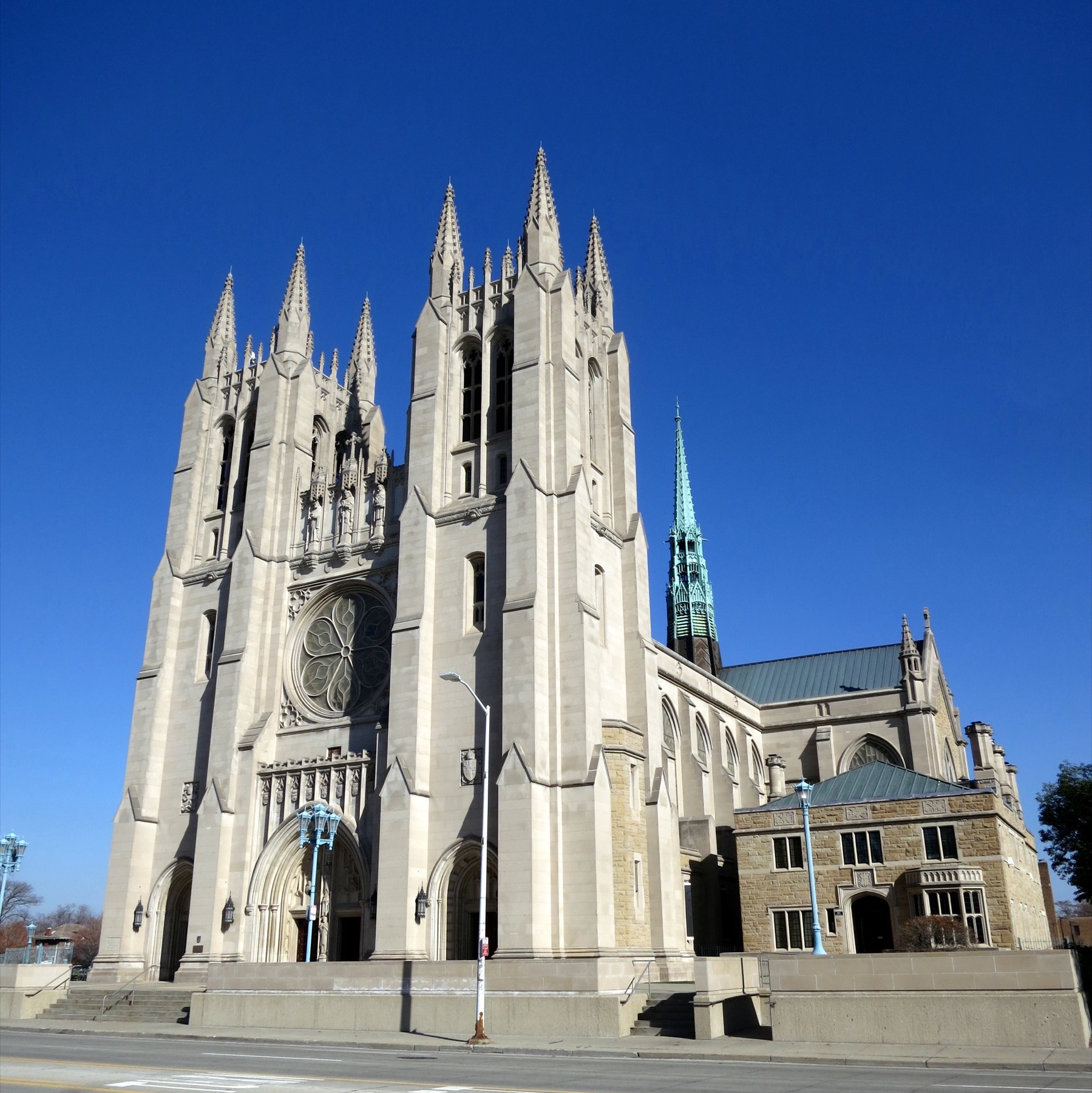
Archbishop Edward Weisenburger of Detroit, who in April 2025 announced that prior permissions for the Traditional Latin Mass in the Archdiocese’s parish churches would expire on 1 July 2025 and “cannot be renewed,” citing the authority the Holy See has reserved to itself. Photo: Nheyob, CC BY-SA 4.0, via Wikimedia Commons.
Event 56 of 57
By the spring of 2025 the long aftershock of Traditionis Custodes had reached a third wave. The first had been the motu proprio itself, in 2021; the second, the 2023 rescript that reserved key permissions to Rome alone; the third was now arriving diocese by diocese, as bishops who had at first applied the new law gently were obliged, or chose, to apply it to the letter. In April 2025 it reached the Archdiocese of Detroit. There, a recently installed archbishop, Edward Weisenburger, gathered his priests and told them that the permissions which had allowed the old Mass to continue in their parish churches would lapse on 1 July 2025, and that, under the law as it now stood, he could not renew them. It was not framed as a personal crusade. It was framed as obedience.
What the Archbishop Said
The reasoning Detroit gave was juridical, and it was accurate. Since the rescript of 21 February 2023, the permission to use a parish church for the 1962 Missal, or to erect a personal parish for it, has been reserved “in a special way to the Apostolic See,” meaning the Dicastery for Divine Worship. A diocesan bishop can no longer grant it on his own authority. Detroit’s announcement stated this plainly, and it is the legal hinge on which the whole decision turns. The prior permissions, the archdiocese explained, simply could not be renewed by the archbishop, because the renewing was no longer his to do.
The Holy See has reserved for itself the ability to allow the Traditional Latin Mass to be celebrated in parish churches. Local bishops no longer possess the ability to permit this particular liturgy in a parish church.
— Archdiocese of Detroit, “Update on Traditionis custodes in the Archdiocese of Detroit” (April 2025)
On that premise the practical decisions followed. The prior permissions “to celebrate this liturgy in Archdiocesan parish churches (which expire on July 1, 2025) cannot be renewed.” In their place the archbishop announced his intention to provide for the old Mass elsewhere: not in the parishes, but in settings the law still left open to him.
The Detroit decision turned on a single distinction drawn by the 2023 rescript: the bishop may still permit the 1962 Missal in non-parish settings (chapels, shrines, oratories), but he can no longer authorize it in a parish church without Rome. So the old Mass in Detroit was not forbidden; it was relocated. The faithful kept the Mass and lost the parish. That is the precise shape of the third-wave suppression: not abolition, but displacement.
The Regional Plan
Rather than simply withdraw the Mass, the archbishop proposed to gather it. He stated his intention “to identify a non-parish setting where the Traditional Latin Mass may be celebrated in each of the Archdiocese’s four regions.” The map of dozens of parish permissions was to be redrawn as four designated sites. For some of the faithful this meant a longer drive, a strange building, a community scattered from the parish that had nourished it; for the archdiocese it meant a structure it could defend as fully within the law.
It must be said plainly, because honesty requires it: Archbishop Weisenburger acted on authority the Holy See had reserved to itself, not on a power he seized. The restriction on parish churches is Rome’s, established by the 2023 rescript; the bishop was applying the universal law, not defying it. Whatever one feels about the result, the legitimacy of the act is not in question, and a Catholic in communion with Rome does not pretend otherwise. The grief is real; the disobedience is not the archbishop’s.
And the Mass did not vanish from Detroit. St. Joseph Shrine, entrusted since 2016 to the canons of the Institute of Christ the King Sovereign Priest (a society of apostolic life devoted to the 1962 Missal) was untouched by the change, for it is a shrine and not a parish. Its ministry, the archdiocese confirmed, “functioning specifically to care for Christ’s faithful who desire to participate in the Traditional Latin Mass, will continue.” The reserved center held; the parish periphery did not.
The Cost, Named Honestly
It would be a failure of charity to report this as a mere administrative tidying. For families who had built their week around a parish Mass, the difference between a parish church and a designated regional chapel is not a technicality — it is the difference between belonging to a parish and being a visiting congregation in a borrowed room. The legal logic is sound; the pastoral wound is real, and the two facts do not cancel each other. The question Detroit raises is not whether the archbishop had the authority (he plainly did), but whether a law that forces a faithful, growing, obedient community out of its parish church serves the unity it was written to protect.
Detroit was not an isolated case but a marker of the moment. The same logic was unfolding across the United States, and within months it would erupt far more sharply in the Diocese of Charlotte, where a comparable consolidation provoked something Detroit had not: open resistance from the priests themselves. What Detroit shows, in its quieter way, is how a universal law lands in a particular place: as a notice to priests, a date on a calendar, and a family deciding whether the longer drive is worth keeping the Mass of their fathers.
Events That Led Here
Where It Led
- Archdiocese of Detroit, “Update on Traditionis custodes in the Archdiocese of Detroit” (April 2025), aod.org (primary source; all verbatim quotes drawn from this page)
- Catholic News Agency / National Catholic Register, “Detroit parishes must cease Traditional Latin Mass celebrations by July 1” (April 2025), reporting
- Pope Francis, Rescript ex audientia on Traditionis Custodes (21 February 2023). Vatican News; reserving the parish-church and personal-parish permissions to the Apostolic See
- Pope Francis, Traditionis Custodes (16 July 2021) and accompanying Letter to the Bishops, vatican.va