The Synod and the Missa Normativa
Shown a draft of the new Mass and asked to approve it, the world’s bishops hesitated.
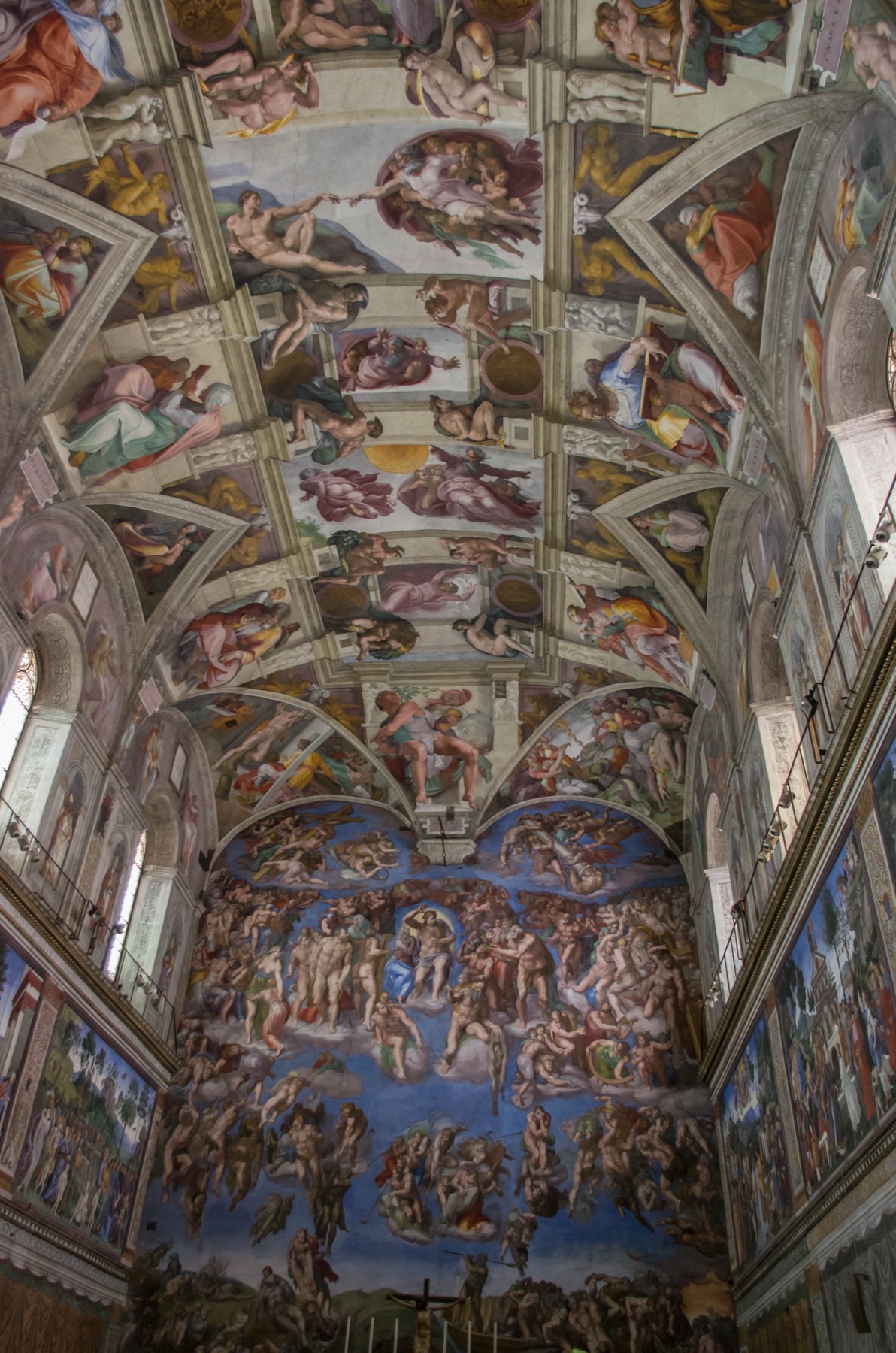
The Sistine Chapel, where on 24 October 1967 the Consilium staged a demonstration of the draft “Missa Normativa” before the assembled Synod of Bishops. Photo: Antoine Taveneaux, CC BY-SA 3.0, via Wikimedia Commons.
Event 33 of 57
In October 1967, two years before the new Mass was promulgated, the men charged with reforming it did something they would not do again: they showed a draft to the bishops of the world and asked what they thought. The answer should have given them pause.
The occasion was the first General Assembly of the Synod of Bishops, the new consultative body Paul VI had created in 1965. Among the questions put before it was the progress of the liturgical reform. The Consilium — Fr. Annibale Bugnini’s commission — presented a draft Order of Mass it called the Missa Normativa, the “normative Mass,” and on 24 October 1967 it was not merely described but celebrated before the Fathers in the Sistine Chapel, so the bishops could see the reform in action.
The Vote That Gave Pause
Then the bishops were polled. The Missa normativa was one of twelve liturgical questions put to the Synod; on 24 October the same Fathers had approved three new Eucharistic Prayers by 127 placet to 22 non placet, with 34 placet iuxta modum. The exact tallies are reported with small variations across the sources, but the shape is not in doubt: the assembly was sharply divided, and outright approval fell short of a clear majority. By the count Bugnini himself records, of roughly 180 voting Fathers only a minority gave an unqualified placet (“it pleases”); a large bloc voted placet iuxta modum (“yes, with reservations”), and several dozen voted non placet (“it does not please”) outright. A draft meant to showcase the reform had instead exposed how many shepherds were uneasy.
These figures are sometimes cited slightly differently, and the vote was consultative — a straw poll on a draft, not a binding judgment. But its meaning was plain to everyone in the room. When the world’s bishops were given a clear look at where the reform was heading, a strong current among them pulled back. Cardinal Heenan of Westminster, who was present, warned the Fathers bluntly that he feared the new rite would drive away the men and the young, leaving congregations mostly of women and children.
At home it is not only women and children but also fathers of families and young men who come regularly to Mass. If we were to offer them the kind of ceremony we saw yesterday in the Sistine Chapel we would soon be left with a congregation mostly of women and children.
— Cardinal John Heenan, Archbishop of Westminster, intervention at the Synod of Bishops, October 1967; quoted in Michael Davies, Pope Paul’s New Mass
Heenan’s objection was not aesthetic. It was that the men remaking the rite did not know the people who would have to pray it. “The liturgy is not primarily an academic or cultural question,” he told the Fathers; “it is above all a pastoral matter for it concerns the spiritual lives of our faithful.” He had read the draft and drawn a conclusion about its authors: “it was clear to me that few of them can have been parish priests.” He ended with a warning that reads now like a prophecy.
❝It would be tragic if after the bishops have gone home, no notice were to be taken of their opinions.
— Cardinal John Heenan, Synod of Bishops, October 1967
It must be said flatly that the experiment was not a success and even that it had an effect contrary to the one intended …
— Annibale Bugnini, C.M., on the Sistine Chapel demonstration, The Reform of the Liturgy 1948–1975 (Liturgical Press, 1990), p. 349
Reform Without Reception
What makes the 1967 vote so important is what came next: nothing changed course. The reservations were noted; revisions were made to particulars; and the work went forward. Within two years the Novus Ordo Missae was promulgated and made the Missal of the Roman Rite. The bishops had been consulted, and their hesitation had been absorbed rather than heeded.
It is easy to overstate this. The 1967 Synod did not “reject the new Mass”; it gave a divided, qualified vote on an early draft, and the rite that was finally promulgated in 1969 was revised from what the bishops saw. Nor does a cool reception touch the validity or legitimacy of the Mass that followed — that is never in question here. What the vote shows is narrower and still serious: that the reform was running ahead of the very pastors who would have to receive it.
The Consilium did not hide the draft; it sought the bishops’ judgment and did revise in response to it. That is to its credit. The honest criticism is not that it acted in secret but that, having heard real hesitation from the world’s shepherds, it pressed on at the same pace — confident that the reform’s logic should govern, rather than the slower wisdom of reception.
The Sistine demonstration of 1967 is therefore a quiet hinge in this story. It is the moment the Church’s bishops were handed the reform and asked to bless it — and a great many, looking at it plainly, could not yet bring themselves to. Two years later it would be theirs to celebrate all the same.
They were shown a draft of the new rite in 1967 and gave it only a divided, qualified vote. Two years later, revised, it was promulgated. Did the New Mass Empty the Pews? →
- placet 71 — unqualified approval.
- placet iuxta modum 62 — approval only with reservations.
- non placet 43 — outright rejection.
- abstentions 4.
- What it was A consultative straw poll on a draft, not a binding judgment — and the rite promulgated in 1969 differed from what the Fathers saw.
- What it showed Fewer than two in five voting Fathers gave the draft an unqualified yes.
- Lex orandi If the Mass stresses Bible readings over the Eucharistic prayer, “the faith of both clergy and people will be weakened.”
- The Real Presence No change should be made “which might seem to throw doubt on this doctrine.”
- Heed the pastors He feared the liturgists would answer, “These bishops know nothing about liturgy.”
- Keep Latin “If the Church is to remain truly the Catholic Church it is essential to keep a universal tongue.”
Events That Led Here
- Annibale Bugnini, The Reform of the Liturgy 1948–1975 (Eng. ed., Liturgical Press, 1990) — the 1967 Synod and the Missa Normativa vote
- Cardinal John C. Heenan, intervention at the 1967 Synod of Bishops (widely reproduced)
- “De liturgia in prima Synodo Episcoporum,” Notitiae 3 (1967) 353–363: the week’s chronology (pp. 353–354) and the full tallies (p. 363)
- Acts of the First General Assembly of the Synod of Bishops, October 1967
- Michael Davies, Pope Paul’s New Mass — reproduces Cardinal Heenan’s intervention in full