Arlington’s Slow Strangulation
In one of America’s most devout dioceses, the new law fell not as a single blow but as a slow tightening — faithful families in full communion watching the Mass they loved recede, parish by parish, from the ordinary life of the Church.
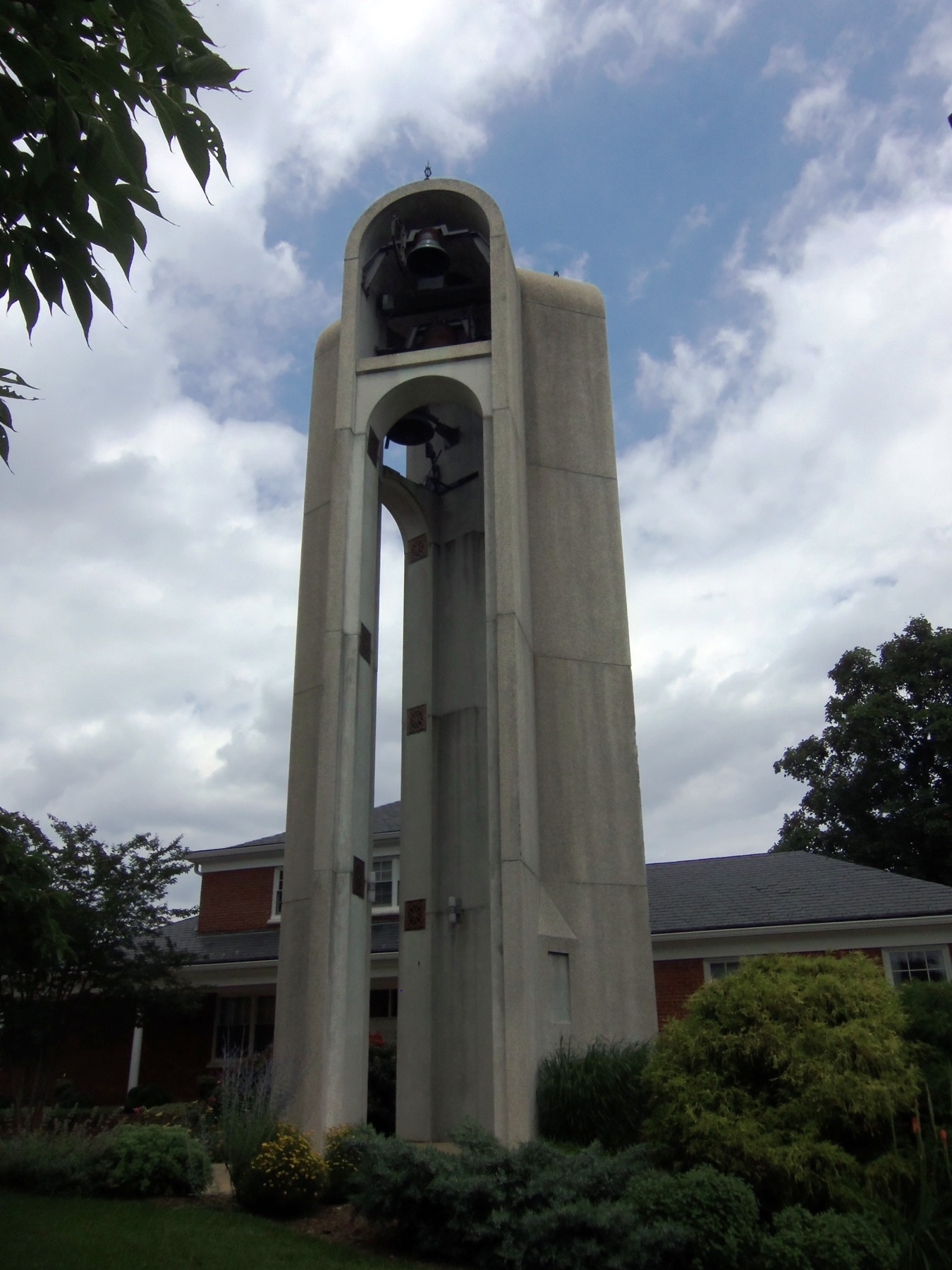
The Diocese of Arlington, Virginia — for years home to one of the largest concentrations of diocesan Traditional Latin Masses anywhere — where Bishop Michael Burbidge’s implementation of Traditionis Custodes took effect on 8 September 2022. Photo: Farragutful, CC BY-SA 3.0, via Wikimedia Commons.
Event 53 of 57
Across the Potomac from Washington, the Diocese of Arlington had become, almost by accident, a kind of refuge. By the early 2020s it was widely reported to host one of the densest concentrations of diocesan Traditional Latin Masses in the world: offered, according to that reporting, at roughly twenty parishes, woven quietly into the ordinary Sunday rhythm of suburban Virginia. The people who filled those pews were not rebels or romantics on the fringe of Catholic life. They were large young families, converts, the kind of devout laity any bishop would be glad to have. Then, on 8 September 2022, the new universal law reached them, and the refuge began, slowly, to close.
From Many Parishes to a Few
Bishop Michael Burbidge’s implementation of Traditionis Custodes took effect that September under a two-year permission from Rome. Where reporting had counted the older Mass at something like twenty-one parishes, it would now be permitted at a much smaller set of locations, news accounts described roughly eight, and noted that only some of these were ordinary parish churches; others were chapels or designated sites set apart from the regular parish round. The restriction was real and it was felt: a Mass that had been a short drive away for thousands of families was now, for many, an hour’s journey or simply gone.
The figures here come from contemporary reporting rather than from a line-by-line reading of the diocese’s own decree, and they should be held that way, as the order of magnitude of a contraction, not as audited totals. But the magnitude is the point. A worshipping community that had grown up over years, embedded in the parishes where its members were baptized and married and buried their dead, was abruptly told it could no longer gather where it had been gathering.
The Quiet Part: Don’t Publish the Times
What made Arlington a study in slow strangulation, rather than a clean suppression, was the texture of the restrictions. Among the most keenly felt, according to reporting, was a constraint on how parishes could announce the permitted Masses, limits on publishing the schedule in bulletins, on websites, on social media. A Mass that may not be advertised is a Mass that cannot easily be found; the next generation does not stumble into it, the newcomer does not discover it, the community cannot grow. To those affected, this felt less like regulation than like a slow starving of the rite of oxygen, permitted to exist, but not to be known.
There is no use pretending this did not wound people. Families who had done nothing but love the Mass of their grandparents (who had never questioned the validity of the reformed rite, never left the Church, never withheld obedience) experienced the new restrictions as a kind of bereavement. To name that cost plainly is not to accuse anyone of bad faith. It is to refuse the comfortable fiction that a law applied this way to so devout a people came at no human price at all.
The 2024 “Renewal”
On 19 July 2024, as the original two-year window ran out, the diocese announced that the Holy See had renewed its permission for the continued celebration of the Traditional Latin Mass in Arlington “in accordance with Traditionis Custodes.” On its face this was a reprieve: the Mass would go on. But the renewal carried the restrictions forward rather than lifting them, and some in the affected community read the accompanying terms, reportedly including a gradual substitution of celebrations, as a further tightening dressed as a continuation. The wording mattered enormously, and much of it can only be confirmed against the diocese’s own text; this article keeps the harder claims attributed rather than asserted.
It is essential to see clearly what this episode was and was not. Bishop Burbidge acted under the universal law of the Church and the direction of the Holy See, that is, under legitimate authority, lawfully exercised. What can be questioned in good conscience is the prudence of applying so blunt an instrument to so faithful a flock, and the pastoral cost of doing so. And the response of the Arlington faithful was not rebellion but lawful persistence: petitions, patience, attendance at the Masses that remained, fidelity inside the Church. Both bishop and people stayed in communion. The tragedy, if there is one, is a tragedy within the household of faith — not a schism at its door.
A Case Study in the Human Cost
Arlington matters to this timeline precisely because it was so ordinary, not a hotbed of dissent but a thriving, obedient, family-filled corner of the American Church. That is what makes it a case study. Traditionis Custodes was framed as a remedy for division; in Arlington it fell on a community whose chief offense was its size and its devotion. The faithful did not answer with defiance. They wrote, they waited, they kept coming to the Masses they were still allowed, and they trusted that a door narrowed in one pontificate need not stay narrowed forever, as, in the long story this timeline tells, such doors have a way of opening again.
The Arlington story is, in the end, a hopeful one for anyone who loves both the old Mass and the Church entire. It shows that fidelity to the traditional rite and fidelity to one’s bishop and the Holy See are not opposites, that thousands of Catholics can absorb a painful restriction without bitterness toward the Pope, without doubting the validity of the reformed rite their neighbors attend, and without leaving the only Church there is. That kind of patience is not weakness. In the long view of this timeline, it is exactly what has, again and again, won the future.
Events That Led Here
Where It Led
- Diocese of Arlington, “Vatican Renews Permission for Celebration of Traditional Latin Mass in the Diocese of Arlington, in Accordance with Traditionis Custodes” (19 July 2024), arlingtondiocese.org (diocesan release; specifics to be confirmed against the diocesan text)
- Catholic News Agency (CNA) reporting on the September 2022 implementation of Traditionis Custodes in the Diocese of Arlington under Bishop Michael Burbidge
- The Catholic Herald, “How a determined laity in Washington, D.C., and Arlington is fighting Latin Mass restrictions” context reporting on the affected communities
- Pope Francis, Traditionis Custodes and accompanying Letter to Bishops (16 July 2021), vatican.va
- Pope Benedict XVI, Summorum Pontificum (7 July 2007), vatican.va