Centre de Pastorale Liturgique
The French Centre Where Censured Theologians Found a Platform, and Where Most of the 1969 Missal Was Worked Out Twenty Years Before It Was Promulgated
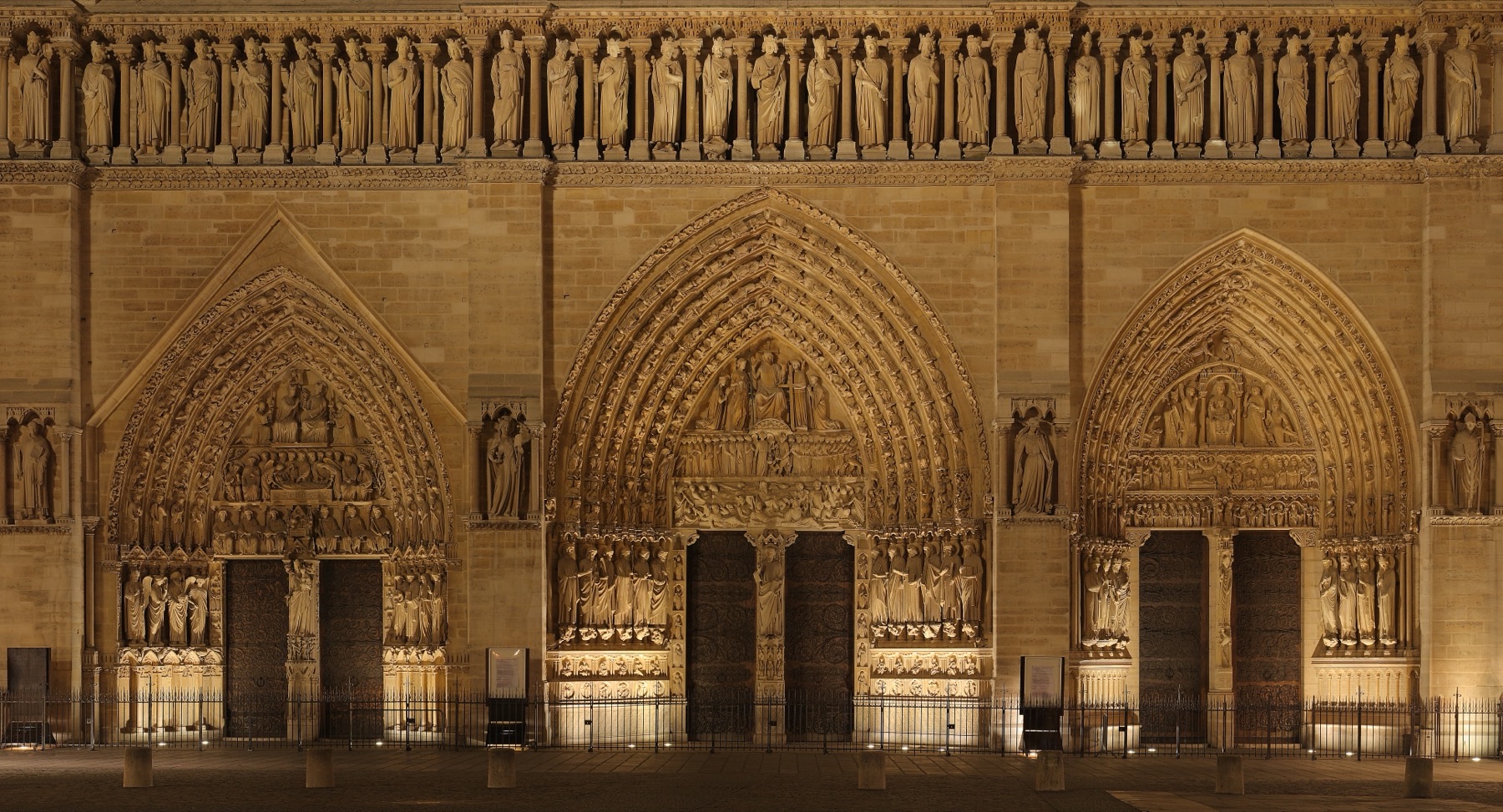
Paris, 1943, in Nazi-occupied France, a study centre was founded whose working papers anticipate most of the Missal promulgated twenty-six years later.
Photo: Benh LIEU SONG, CC BY-SA 3.0, via Wikimedia Commons. · Event 11 of 57
On May 20, 1943, in Nazi-occupied Paris, a small cadre of forward-thinking clergymen gathered at the Dominican-run Éditions du Cerf publishing house. There, amid the turmoil of World War II, they planted the seeds of what would become a liturgical revolution. The meeting—presided over by the exiled Belgian monk Dom Lambert Beauduin, pioneer of the early 20th-century Liturgical Movement—marked the founding of the Centre de Pastorale Liturgique (CPL). Its creation would prove to be “one of the places where the conciliar liturgical reform was prepared,” effectively bridging the pre-Vatican II liturgical movement and the sweeping changes that followed.
But was this new centre reviving ancient tradition or engineering an unprecedented rupture? The honest answer is narrower than either, and more troubling than either: the CPL did its work in the open, published it, submitted it, and was thanked for it by Rome, and by the time Vatican II convened, most of what would appear in the 1969 Missal had already been worked out in its study days and congresses. Nothing here was secret. That is the point. What follows is not the story of a conspiracy. It is the story of twenty years of sustained, coherent, well-documented effort meeting a Roman authority that praised it, warned against parts of it, and never once resolved the difference between the two.
The Founders and Their Mission
The CPL’s founders were two Dominican friars whose complementary talents drove the project. Fr. Pie Duployé, working at Cerf publishers, had been inspired by the German liturgical movement, figures like Odo Casel and Romano Guardini, and dreamed of a coordinating center to “encourage diverse initiatives…for a more authentic liturgical life” in French parishes. Fr. Aimon-Marie Roguet, a gifted preacher known for his innovative radio-broadcast Mass commentaries, brought communication savvy and a keen sense of the average believer’s needs.
Also present at that inaugural meeting was a young diocesan priest from Toulouse named Aimé-Georges Martimort, who “happened” to attend and soon proved indispensable. Martimort insisted on methodological rigor: “We must distinguish what belongs to scholarly research from what pertains to popularization—the first being indispensable for the success of the second.” Any pastoral reforms had to be grounded in solid historical and theological work. This principle would guide the CPL’s structure, and make its conclusions all the more influential when presented as “scientific” findings rather than mere opinion.
A Refuge for Silenced Theologians
Here is the part of the CPL’s story its admirers rarely emphasise. The centre proved to be a haven for the era’s nouvelle théologie (“new theology”) movement, including theologians who were under Roman censure.
Dominicans like Fr. Yves Congar and Jesuits like Fr. Jean Daniélou (both future cardinals, but in the 1950s under Vatican censure for their advanced theological ideas) were enlisted as speakers at CPL study sessions. The significance cannot be overstated: Rome had forbidden these men to teach, yet the CPL gave them a platform.
As one historian notes, at the CPL’s private gatherings Congar “was invited to share the fruits of his research…and could express himself freely” despite his official censure. Alongside Congar and Daniélou, other nouvelle théologie figures like Fr. Henri-Marie Féret, Fr. Pierre Liégé, and Fr. Joseph Lécuyer contributed to CPL conferences.
State this precisely, because the loose version is false. The CPL was not a parallel magisterium and claimed no authority to teach. What it was is more mundane and more effective: a venue. A man forbidden to teach in a faculty was not thereby forbidden to speak at a study day, and Rome’s censures reached the chair but not the room. So ideas the Holy Office had moved against went on being developed, refined and published, and two decades later their authors were periti of an ecumenical council. No rule was broken. The discipline simply did not reach far enough to do what it was for.
The Three-Tiered Laboratory
To achieve its aims, the CPL developed a three-tiered program that effectively pioneered a new model of “liturgical laboratory.”
First: The Closed-Door Expert Sessions (Journées d’étude). Intensive study days by invitation only. A small circle of liturgists, theologians, biblical scholars, historians, and even sociologists would meet behind closed doors to tackle specific questions of liturgical reform. They would bring research, debate proposals, and hammer out conclusions “of a doctrinal order.”
Second: The Public Conferences (Sessions). Immediately following the expert meetings, the CPL hosted larger gatherings open to all, often at spacious venues like the Jesuits’ Sainte-Geneviève school in Versailles. The findings of the study group were “distilled in the form of magisterial teachings” for hundreds of participants. These sessions drew 400–500 attendees annually.
Third: The National Congresses. At wider intervals, the CPL organized massive national Liturgical Congresses, notably in 1947, 1957, and 1962. These showpiece events drew thousands of participants, designed to make headlines and signal that liturgical reform had arrived.
❝The laboratory metaphor is the CPL’s own, and it is worth taking literally. A laboratory is a controlled environment. These proposals were tested on four hundred self-selected enthusiasts at Versailles, and then, twenty years later, promulgated for every parish on earth, most of which had never sent anyone to Versailles.
— Domus Dei
The International Network: The Blueprint Takes Shape
The CPL did not operate in isolation. It was the French node in an international network, connected to Maria Laach in Germany, Klosterneuburg in Austria, and reform centres across Europe. Through a decade of international congresses these centres converged, publicly and by agreement rather than by direction, on a set of resolutions that grew steadily more far-reaching. No one was coordinating them from above. They simply wanted the same things and kept meeting.
The specific proposals reveal how completely the Novus Ordo was designed before Vatican II ever convened:
Maria Laach, 1951 (30th anniversary of the first Dialogue Mass): Suppress the Prayers at the Foot of the Altar. Eliminate the Last Gospel. Drop the Leonine Prayers after Low Mass. Move Scripture readings to the vernacular. Reform the Offertory prayers. Restructure the Roman Canon itself.
Mont Sainte-Odile, 1952 (France): Reduce the priest’s signs of the cross during Mass. Reduce genuflections. Shorten the Communion formula to simply “Corpus Christi.” Permit vernacular hymns during Mass.
Lugano, 1953 (Switzerland): The CPL teamed with Germany’s Liturgical Institute of Trier to host hundreds of reformers—including the young Msgr. Annibale Bugnini, future architect of the Novus Ordo. Resolutions included introduction of the vernacular for Scripture readings and prayers, simplification of rubrics, reforms to the Offertory and Canon, new General Intercessions in the vernacular, and encouragement of versus populum.
Assisi, 1956: By this congress the shape of the future book was substantially settled, vernacular, simplified rubrics, a revised Offertory and Canon, the Prayer of the Faithful, concelebration. Traditionalist writers describe the mood of Assisi in much stronger terms than that: “a smug victory lap,” “a climate of seething mutiny against the Church’s sacred liturgical traditions.”
Those phrases circulate widely and this page previously endorsed them. It no longer does, for two reasons. The first is that they are unattributed, we have not been able to trace them to a named author in a citable edition, and an unsourced characterisation is not evidence of anything. The second is more important: Assisi was a papal event. Pius XII addressed it. Cardinals attended it. A gathering the Pope addresses is not a mutiny, and calling it one costs the argument far more than it gains, because it invites the obvious reply, that if this was a revolt, Rome was hosting it. The sober description does the work the polemic cannot: the men at Assisi were doing openly, with encouragement, what would be enacted thirteen years later.
Beauduin’s Warning: The Elder Sounds the Alarm
The most significant early warning about the CPL’s trajectory came from an unexpected source: Dom Lambert Beauduin himself, the very man who had presided over its founding.
In the first issue of La Maison-Dieu (January 1945), the journal Beauduin had helped launch, he penned an article cautioning against overzealous reform. He warned about “zealous liturgists who…can become audacious reformers” by assuming the Church’s then-current liturgy was a hopeless “impoverishment” in need of drastic overhaul.
The man called “the Moses of the 20th-century Liturgical Movement” saw where his successors were heading and tried to pull them back. He disliked both liturgical “romantic antiquarianism” and “wild innovationism.” But the momentum was already beyond his control.
Two years later, the Venerable Pius XII echoed this concern in Mediator Dei (1947). Without naming groups, the encyclical rebuked certain reformist trends for “antiquarianism.” State that carefully, because it is routinely overstated: §62 opens by calling the return to the sources wise and most laudable, and what it condemns is reducing everything to antiquity, which §63 defines as reverting to ancient usage while discarding the later patterns Providence introduced. Pius XII did not condemn ressourcement. He condemned a particular abuse of it, and then named eight practices. (See Mediator Dei: Praise and Warning for the paragraphs quoted whole and the tally of what became of the eight.)
Beauduin was “greatly encouraged” by Mediator Dei’s balanced approach. But as the 1950s progressed, the momentum of reform clearly shifted: instead of renewing people’s participation in the existing rites, the reformers now wanted to rewrite the rites themselves. Neither Beauduin’s caution nor Pius XII’s correction proved sufficient to stop it.
From CPL to Consilium: The Pipeline to Vatican II
By the time Vatican II convened in 1962, many of the CPL’s longtime dreams were already drafted into the Council’s agenda. Several CPL veterans had seats at the table: Aimé-Georges Martimort and Pierre-Marie Gy served on the preparatory commission for the liturgy schema. Louis Bouyer, Joseph Gelineau, Bernard Botte, and others were appointed official Council periti (experts) assisting the bishops.
They played an outsized role in shaping Sacrosanctum Concilium, the Constitution on the Sacred Liturgy (December 1963). The Council’s call for “full, conscious, and active participation” echoed what the CPL had been saying for twenty years. And the concession that has to be made here is the one that decides the whole question: Sacrosanctum Concilium passed by 2,147 votes to 4. Whatever the CPL veterans achieved at the Council, they achieved it by persuading an assembly of bishops in open session, not by evading one.
In 1965, the CPL was officially absorbed into the French Bishops’ Conference structure, renamed the Centre National de Pastorale Liturgique (CNPL), and placed under the Episcopal Liturgical Commission. Its mission now was not merely to prepare reform but to enforce it, driving the concrete application of Vatican II throughout France and actively working to eliminate the old Mass from French parishes.
❝From wartime study circle to conciliar drafting table to diocesan enforcement, in twenty-two years, every step of it authorised. A movement did not seize the institution. It outlasted everyone who might have slowed it, and was handed the institution at the end.
— Domus Dei
The Pioneers’ Reckoning: Bouyer’s Devastating Testimony
The most damning testimony against the post-conciliar reform comes not from traditionalist critics but from the CPL’s own veterans.
Louis Bouyer, Oratorian theologian, CPL collaborator, Council peritus, left a devastating account in his memoirs. This page used to render it as a quotation: “Between the antipasto and the cheese, we drafted the text…” Bouyer never wrote that sentence. It is a paraphrase that hardened into a quotation somewhere in transmission, and it has been removed from this article and from the carousel below.
The episode is real; only the wording was invented. Bouyer records that the text of the new Second Eucharistic Prayer had to be repaired in extremis, and that he and the Benedictine liturgist Bernard Botte did the repairing in one evening at the table of a trattoria in Trastevere, because everything had to be handed in the next morning. Two points of precision, both of which cut against the popular version. First, they were not composing. Eucharistic Prayer II rests on Botte’s reconstruction of the Apostolic Tradition; Bouyer revised, and revised under duress. Second, that is the damning part, not the dinner. The scandal is not that two scholars drafted a canon over a meal, they did not, but that the Roman Rite acquired a second Eucharistic Prayer whose final wording was settled against a breakfast deadline by men who thought the formula in front of them was bad.
Source: Louis Bouyer, Mémoires (Paris: Éditions du Cerf, 2014); English, The Memoirs of Louis Bouyer (Angelico Press, 2015). The passage reached English readers chiefly through Sandro Magister’s 2014 translation of the relevant pages. ⚠ Page-level citation still outstanding, do not add page numbers to this article until they have been read in the edition itself.
Bouyer’s own verdict was that the work had been rushed and that certain reforms went too far, too fast. The scholarly rigour Martimort had insisted upon in 1943, “distinguish what belongs to scholarly research from what pertains to popularization”, had given way to bureaucratic speed. Note what he does not say, and what this site will not say for him: he does not describe a rite stolen by outsiders. He describes his own side working badly.
Bernard Botte, the Benedictine patristics scholar whose work on the Apostolic Tradition heavily influenced the new rites, later lamented the loss of Latin and Gregorian chant more than he had initially expected.
And Romano Guardini, whose Spirit of the Liturgy had provided the movement’s theological framework, is reported to have looked at the reformed texts and delivered a one-word verdict: Klempnerarbeit!, “Plumber’s work!” Hasty, slipshod, mechanical.
The report is second-hand and undated, and the date is not a detail. Guardini died on 1 October 1968, six months before the Missal of Paul VI was promulgated in April 1969. Whatever texts he was judging, they were not the new Missal. They can only have been the interim reforms of 1964–67: Inter Oecumenici, the 1965 Ordo Missae, the Missa normativa tried before the Synod in 1967. That is a narrower claim than the one usually made from this anecdote. It is also a harder one to dismiss, because it means the movement’s own theological architect had already reached that verdict on the reform before its most far-reaching stage.
The pattern repeats across this entire timeline: pioneers horrified by what was made from their work. They built the laboratory. They mixed the compounds. And when the explosion came, they stood in the wreckage and said: this is not what we meant.
The Verdict: Neither Laboratory Nor Insurgency
A Dominican priest, Fr. Maurice Lelong, delivered the sharpest contemporary verdict on the CPL’s legacy. In 1971 he quipped that the CNPL’s true mission was:
“Changer tout ce qu’on peut changer et, en priorité, l’immuable”—“To change everything changeable and, as a priority, the unchangeable.”
He joked that C.N.P.L. really stood for “Centre National de Pagaille Liturgique” (National Center of Liturgical Chaos), or even “Centre National de la Profanation Liturgique.”
Such sharp words from a fellow Dominican underscore the sense of betrayal felt by traditional Catholics: the pastoral-liturgical renewal that promised to “open the treasures of the liturgy” had degenerated into a reckless overhaul of holy things.
Where the CPL Belongs in This Trajectory
The founding of the Centre de Pastorale Liturgique in 1943 stands as a hinge moment, the point where the movement crossed definitively from Phase One (education) into Phase Two (experiment) and began building the infrastructure for Phase Three (ideology). The CPL was not merely a study circle. It was:
A refuge for silenced theologians, circumventing Rome’s censures to develop ideas the magisterium had deemed dangerous.
A laboratory for liturgical experimentation, where changes were tested on elite audiences before being released on unprepared parishes.
A node in an international network: coordinating with Maria Laach, Klosterneuburg, and reform centers across Europe to produce the blueprint for the Novus Ordo a decade before Vatican II.
A pipeline to the Consilium, placing its veterans in positions of influence over the Council’s liturgy schema and post-conciliar implementation.
An enforcement arm, after 1965, actively working to eliminate the traditional Mass from French parishes.
The principle established in that 1943 Parisian meeting room (that experts have the competence to redesign the Church’s worship according to their historical reconstructions) is the principle that made the Novus Ordo possible. Once that principle was conceded, everything else followed.
The temptation with a file like this one is to read it as a conspiracy uncovered, and every fact on this page resists that reading. The CPL published its proceedings. Its congresses were reported. Its founder issued the first public warning against its own trajectory, in its own journal, in 1945. A pope blessed its work and, two years after that blessing, warned against parts of it in an encyclical. Its veterans reached the Council’s drafting table by appointment, and the document they shaped passed 2,147 to 4. There is no hidden hand here and no moment of seizure to point at.
What there is, is duration. Twenty-two years of continuous, coherent, well-staffed work by men who agreed with each other about what needed doing, set against a Roman authority that was fast to diagnose and slow to govern: that saw the danger in 1945, named it in 1947, blessed the congress advancing it in 1953, and never once made the correction stick. Mediator Dei was never overruled. It was outrun, and the CPL is the clearest single picture of how outrunning was done: not in the dark, but in the open, patiently, and for longer than anyone was willing to keep objecting.
- Fr. Pie Duployé, O.P.: Co-founder. Inspired by German movement (Casel, Guardini). Conceived the CPL as coordinating center.
- Fr. Aimon-Marie Roguet, O.P.: Co-founder and co-director. Communications expert, radio Mass commentator, tireless organizer.
- Aimé-Georges Martimort: Co-director. Insisted on scholarly rigor. His 1945 memo predicted Vatican II reforms. Later a Council peritus.
- Louis Bouyer: Oratorian theologian, convert from Lutheranism. Council peritus. Composed Eucharistic Prayer II. Later expressed deep regret.
- Fr. Yves Congar, O.P.: Silenced by Rome. Found platform at CPL despite official censure. Future cardinal.
- Fr. Jean Daniélou, S.J.: Silenced by Rome. Found platform at CPL despite official censure. Future cardinal.
- Maria Laach (1951): Suppress Prayers at Foot of Altar, eliminate Last Gospel, drop Leonine Prayers, vernacular readings, reform Offertory, restructure Canon.
- Mont Sainte-Odile (1952): Reduce signs of cross and genuflections, shorten Communion formula to “Corpus Christi,” permit vernacular hymns.
- Lugano (1953): Vernacular for readings and prayers, simplified rubrics, reformed Offertory and Canon, General Intercessions, versus populum encouraged.
- Assisi (1956): “The whole ground plan for the future Novus Ordo was already drawn up.” Victory lap atmosphere.
- The Pattern: Every major feature of the 1969 Novus Ordo was proposed in these congresses—a full decade before Vatican II.
- Dom Beauduin (1945): Warned against “zealous liturgists who can become audacious reformers” in CPL’s own journal.
- Louis Bouyer: Repaired Eucharistic Prayer II in extremis with Bernard Botte, one evening at a Trastevere trattoria, against a next-morning deadline. He revised; he did not compose. The “antipasto and the cheese” wording is not his.
- Bernard Botte: Lamented the loss of Latin and Gregorian chant more than he initially expected.
- Romano Guardini: Reportedly called the reformed texts “Klempnerarbeit”, plumber’s work. Second-hand and undated; he died in 1968, so the target can only be the 1964–67 interim reforms, not the new Missal.
- Fr. Lelong (1971): “Centre National de Pagaille Liturgique” National Center of Liturgical Chaos.
- La Maison-Dieu, No. 1 (January 1945), Dom Lambert Beauduin’s warning article
- Pius XII, Mediator Dei (1947)
- Louis Bouyer, Memoirs (the trattoria account)
- Annibale Bugnini, The Reform of the Liturgy 1948–1975 (Liturgical Press, 1990)
- Benoît-Marie Solaberrieta, Les experts du Centre de Pastorale Liturgique (Presses Universitaires de Rennes, 2016)
- Guillaume Cuchet, Comment notre monde a cessé d’être chrétien (Seuil, 2018)
- Alcuin Reid, The Organic Development of the Liturgy, 2nd ed. (Ignatius Press, 2005)
- Carol Byrne, “Liturgical Anarchy: Dialogue Mass XXI” (Tradition in Action)
- Thomas Kocik, “Dom Lambert Beauduin: The Moses of the 20th-century Liturgical Movement” (Adoremus, 2024)